404-282-0394
Sunrise Detox Alpharetta
Alpharetta, GA
30022
Savannah, GA is a city built on both traditions and new excitements. However, there is also a serious substance abuse epidemic in Savannah, and many people are struggling with drug and alcohol addiction in the Hostess City of the South. Detox is a helpful option for recovery, especially early on because it allows patients to put an end to their dependence in a safe environment.
You too can find safe, reliable drug and alcohol detox centers in Savannah, GA that can help you or your loved one get clean. Let us help your safe recovery today, call 678-679-9298 now.


| Name | Address | Detox Service Setting | Levels Of Care | Media |
|---|---|---|---|---|
Coastal Harbor Health System Behavioral Health |
633 Stephenson Avenue Savannah, GA 31405 |
Detox Service Setting
Inpatient DetoxOutpatient Detox
|
Levels Of Care
InpatientOutpatientAftercare+1
|
|
Coastal Harbor Treatment Center |
1150 Cornell Ave Savannah, GA 31406 |
Detox Service Setting
Hospital DetoxMAT
|
Levels Of Care
InpatientOutpatientPHP
|

|
Recovery Place |
515 East 63rd Street Savannah, GA 31405 |
Detox Service Setting
Inpatient DetoxOutpatient Detox
|
Levels Of Care
InpatientOutpatientPHP
|

|
Recovery Place Inc PHP and IOP |
835 East 65th Street Savannah, GA 31405 |
Detox Service Setting
Inpatient DetoxOutpatient DetoxMAT
|
Levels Of Care
InpatientOutpatientPHP+1
|

|
MedMark Treatment Centers Savannah |
600 Commercial Court Savannah, GA 31406 |
Detox Service Setting
Hospital DetoxInpatient DetoxOutpatient Detox+1
|
Levels Of Care
InpatientOutpatientPHP
|
|
Old Savannah City Mission |
2414 Bull St Savannah, GA 31401 |
Detox Service Setting
Inpatient DetoxOutpatient DetoxMAT
|
Levels Of Care
InpatientOutpatientPHP+2
|
|
Recovery Place Community Services |
466 Martin Luther King Junior Boulevard Savannah, GA 31401 |
Detox Service Setting
Inpatient DetoxOutpatient DetoxMAT
|
Levels Of Care
InpatientOutpatientPHP+1
|
|
Recovery Place Inc Womens Residential Treatment |
12350 Mercy Boulevard Savannah, GA 31419 |
Detox Service Setting
Inpatient DetoxOutpatient DetoxMAT
|
Levels Of Care
InpatientOutpatientPHP+1
|
|
Recovery Concepts |
124 Boardwalk Drive Ridgeland, SC 29936 |
Detox Service Setting
Outpatient Detox
|
Levels Of Care
Outpatient
|
|
Willingway |
311 Jones Mill Road Statesboro, GA 30458 |
Detox Service Setting
Hospital DetoxInpatient DetoxOutpatient Detox+1
|
Levels Of Care
InpatientOutpatientPHP+1
|

|
Reliance Treatment |
201 Donehoo Street Statesboro, GA 30458 |
Detox Service Setting
Outpatient DetoxMAT
|
Levels Of Care
InpatientOutpatientDual Diagnosis
|
|
Pineland – Denmark Street |
5 West Altman Street Statesboro, GA 30458 |
Detox Service Setting
Outpatient DetoxInpatient Detox
|
Levels Of Care
InpatientOutpatientDual Diagnosis+3
|

|
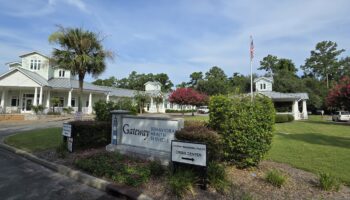
Gateway Behavioral Health Services |
600 Coastal Village Drive Brunswick, GA 31520 |
Detox Service Setting
Inpatient DetoxOutpatient Detox
|
Levels Of Care
InpatientOutpatientPHP+2
|
|
New Beginnings In Christ |
113 Augusta Rd Garfield, GA 30425 |
Detox Service Setting
Inpatient DetoxOutpatient Detox
|
Levels Of Care
InpatientOutpatient
|

|
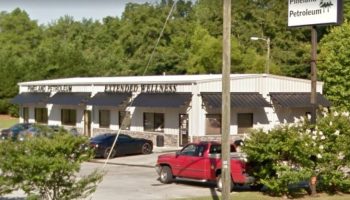
Extended Wellness LLC |
604 Broadfoot Boulevard Vidalia, GA 30474 |
Detox Service Setting
Outpatient DetoxMAT
|
Levels Of Care
OutpatientPHPDual Diagnosis+1
|
|
Fentanyl and methamphetamine are the primary substances driving overdose deaths in Chatham County. Polysubstance combinations involving fentanyl and stimulants are increasingly common, and people who use cocaine or methamphetamine now face opioid overdose risk even when they are not seeking opioids.
Savannah sits near Fort Stewart, one of the largest Army installations in the U.S., and the area has a significant active-duty and veteran population with distinct treatment access needs.
The city’s drug and alcohol detox system operates under a layered state licensing framework. Drug Abuse Treatment and Education Programs (DATEPs), including outpatient detox, residential treatment, partial hospitalization, and intensive outpatient programs, are licensed by the Georgia Department of Community Health through its Healthcare Facility Regulation (HFRD) division.
Furthermore, Narcotic Treatment Programs (NTPs) and Crisis Stabilization Units (CSUs) are licensed by the Georgia Department of Behavioral Health and Developmental Disabilities (DBHDD).
At the local level, Gateway Behavioral Health Services is the Community Service Board (CSB) for Chatham County. It operates a 24/7 crisis center in Savannah and provides state-funded detox and stabilization for uninsured and low-income residents.
For anyone weighing their options, speaking directly with Gateway’s crisis line is often the most practical starting point before choosing a detox center type or level of care.
The cost of drug and alcohol detox in Savannah depends on the level of medical supervision, length of stay, substances involved, and whether medications are required. Georgia ranks among the more affordable states for residential treatment, though out-of-pocket costs without coverage can still be substantial.
Reviewing your detox cost options before contacting facilities helps set realistic expectations and narrow your choice of program types.
Costs in Savannah broadly follow Georgia state averages, with the primary cost drivers being whether care is inpatient or outpatient, whether medications are involved and the facility’s amenities. Consequently, lengths of stay vary widely by substance and medical complexity, and longer stays increase overall costs accordingly.
Under the Affordable Care Act, mental health and substance use disorder treatment must be covered on the same basis as other medical benefits. The Georgia Department of Insurance oversees state insurer compliance with these parity requirements.
Coverage specifics vary by plan, so verifying your benefits directly with your insurer before admission is always the right first step.
The most common commercial health insurance carriers in the Savannah market include:



Medicare covers inpatient and outpatient detox in Savannah under Parts A and B. Part B also covers Opioid Treatment Program services, including methadone, buprenorphine, and naltrexone for opioid use disorder.
Keep in mind that copays and deductibles depend on the treatment setting, services received, and the specific plan.
Georgia Medicaid covers detox and substance use disorder treatment for qualifying enrollees.
The Georgia Pathways to Coverage program extends Medicaid to adults ages 19–64 with household income at or below 100% of the Federal Poverty Level who are not otherwise eligible for traditional Medicaid. Participants must report at least 80 hours of qualifying activities per month to maintain coverage.
Standard Medicaid for eligible populations (children, pregnant women, the elderly and people with disabilities) covers SUD treatment with broader access and no activity requirements.
Cost should not be the reason someone avoids seeking detox in Savannah. Several programs can help cover or reduce the expense:

Gateway Behavioral Health Services uses a sliding fee scale based on federal poverty guidelines. No one is denied services due to inability to pay, and individuals at or below 100% of the Federal Poverty Level are assessed no fee.
DBHDD contracts with providers statewide, including Gateway CSB, to fund treatment for uninsured Georgians. The Georgia Crisis and Access Line (1-800-715-4225) can connect callers with DBHDD-funded services in Chatham County.
The Georgia Opioid Crisis Abatement Trust awarded $44.4 million to 130 organizations in its 2024 grant cycle, with annual funding continuing for approximately 18 years. Savannah-area nonprofits and community organizations are eligible to apply each funding cycle.
The Ralph H. Johnson VAMC Savannah Clinic at 1170 Shawnee Street provides outpatient substance use disorder services, including MAT, to veterans and active-duty military members. Same-day appointments are available, and no VA enrollment is required to inquire.
Standing to Achieve New Direction (STAND) provides nonprofit outpatient substance use programming for adults 18–65 in Savannah using a combination of Medicaid, sliding-scale, and self-pay structures. Life Recovery of Savannah is a faith-based fellowship that offers peer support, family programming, and no-cost naloxone access.
Here are the key regulatory and accreditation bodies that govern detox and withdrawal management services in Savannah and across Georgia:
The primary state licensing authority for Drug Abuse Treatment and Education Programs (DATEPs) under O.C.G.A. § 31-6-21 and Chapter 111-8-19 and Chapter 111-8-53 of the Georgia Administrative Code. HFRD conducts initial inspections and ongoing compliance monitoring for outpatient detox, residential, partial hospitalization and intensive outpatient programs.
As of January 1, 2026, Georgia House Bill 584 is transferring a portion of this licensing responsibility to DBHDD.
DBHDD licenses Narcotic Treatment Programs and Crisis Stabilization Units statewide, including in Savannah. It also administers state contracts with Community Service Boards, including Gateway, and sets the provider manual standards for Medicaid-enrolled behavioral health providers.
Under HB 584, DBHDD assumes an expanded licensing role for DATEPs beginning in 2026.
Federal certification through SAMHSA and DEA registration is required for any program providing methadone for opioid use disorder under 42 CFR Part 8. Georgia-based Opioid Treatment Programs must hold both federal OTP certification and state DBHDD licensure as an NTP.
A separate DEA Schedule III registration is required for providers prescribing buprenorphine for opioid use disorder.
The regional Georgia Department of Public Health authority for Chatham County and the surrounding coastal counties.
The Coastal Health District monitors overdose trends through local Public Health Analysts connected to DPH’s statewide Drug Surveillance Unit, helping detect and respond to overdose clusters in the Savannah area in near-real time.
Medication-assisted treatment in Savannah is governed at both the federal and state levels. Federally, opioid-based MAT must comply with SAMHSA’s OTP rules under 42 CFR Part 8 and DEA controlled-substance regulations.
In Georgia, DBHDD licenses NTPs and aligns state standards with federal requirements; counseling and behavioral therapy are expected components of OTP-based care.
Widely accessible in Savannah following the 2023 federal elimination of the DEA X-waiver requirement. Any DEA-registered clinician can now prescribe buprenorphine for opioid use disorder, making it available through outpatient clinics and telehealth. Recovery Place Community Services and other local providers offer buprenorphine-based outpatient detox and MAT.
Restricted to DEA-certified Opioid Treatment Programs and cannot be dispensed through a regular pharmacy for opioid use disorder. In Savannah, Metro Treatment of Georgia (Savannah Treatment Center) on Southern Boulevard operates as a licensed OTP providing daily methadone dosing. Georgia Medicaid covers methadone treatment at certified OTPs for eligible enrollees.
Available from any licensed prescriber with no OTP requirement. Naltrexone carries no abuse potential and is used in Savannah for both opioid and alcohol use disorders. The injectable extended-release form (Vivitrol) is widely prescribed for alcohol use disorder and is covered by most commercial insurance plans and Georgia Medicaid.
Given fentanyl’s pervasive role in the local drug supply, understanding fentanyl overdose risks and knowing where to find naloxone can save a life.
Savannah’s harm reduction resources draw on both statewide programs and local organizations that serve Chatham County and the surrounding coastal Georgia region.
Georgia Overdose Prevention operates a statewide program that delivers free naloxone kits to any address in Georgia, including Savannah. Residents can request a kit online without visiting a clinic or pharmacy.
The program also maintains a statewide map of 24-hour naloxone distribution boxes, allowing anyone in Chatham County to locate the nearest accessible supply.
Gateway’s Savannah crisis center is the local first-response resource for people in active withdrawal or mental health crisis. Staff provide naloxone kits and overdose response training as part of discharge planning, ensuring patients and the people around them leave with tools to prevent future emergencies. No insurance is required to access crisis services.
GHRC ships complete syringe service program supplies, including naloxone and fentanyl test strips, from its Dan Bigg Distribution Center in Stone Mountain to residents anywhere in Georgia.
For people in coastal Georgia without access to an in-person program, this mail-based model provides consistent, stigma-free access to life-saving supplies without requiring a clinic visit or prescription.
The Coastal Health District’s local Public Health Analysts monitor Chatham County overdose data and alert community partners when spikes or unusual patterns emerge.
This surveillance helps to ensure rapid public health responses when new substances or adulterated supply batches appear in the Savannah area.
Chatham County has recorded sustained increases in drug overdose deaths over recent years, driven primarily by fentanyl and polysubstance combinations.
The figures below are the most recently verified data available for the Savannah area and Georgia statewide.
The Chatham-Savannah Counter-Narcotics Team reported a 20% increase in fentanyl-specific overdose deaths in Chatham County between 2021 and 2022.
Synthetic opioids, primarily fentanyl, were involved in 54% of all drug overdose deaths recorded in Georgia in 2024.
Drug overdose deaths in Georgia fell approximately 22% for the 12 months ending September 2024 compared to the prior year, the first sustained year-over-year decline since 2018.
Call the Georgia Crisis and Access Line at 1-800-715-4225 and ask for DBHDD-funded services in Chatham County.
Gateway Behavioral Health Services is the local Community Service Board and accepts patients regardless of ability to pay on a sliding fee scale tied to federal poverty guidelines.
Walk-in access is available at Gateway’s same-day access clinic on E. Derenne Avenue in Savannah.
Traditional Georgia Medicaid covers inpatient and outpatient detox for eligible populations, including pregnant women, children, elderly individuals and people with qualifying disabilities.
The Georgia Pathways to Coverage program also extends Medicaid to qualifying adults ages 19–64 who meet an 80-hour monthly qualifying activity requirement.
Call DCH at 1-877-423-4746 or visit gateway.ga.gov to check your eligibility before seeking admission.
Yes. Metro Treatment of Georgia (Savannah Treatment Center) on Southern Boulevard operates as a federally certified Opioid Treatment Program and provides daily methadone dosing.
Because federal certification through SAMHSA and DEA is required for all methadone OTPs, this medication cannot be dispensed at a standard clinic, urgent care or pharmacy for opioid use disorder treatment.
Georgia’s 911 Medical Amnesty Law (HB 965, 2014) provides limited civil and criminal immunity from drug possession charges for people who call for emergency medical help during an overdose.
The protection covers small-quantity drug violations and paraphernalia possession by the person requesting help. It does not cover larger quantity offenses or trafficking charges.
Anyone witnessing an overdose in Savannah should call 911 without hesitation.
Yes. The Ralph H. Johnson VAMC Savannah Clinic at 1170 Shawnee Street provides outpatient substance use disorder services, including MAT and mental health co-occurring treatment, to veterans and active-duty military members, with same-day appointments available.
Veterans who need more intensive inpatient detox care may be referred to the Ralph H. Johnson VA Medical Center in Charleston, SC or the VA Atlanta Healthcare System, both of which offer full inpatient SUD programs.
Inpatient detox provides 24-hour medical supervision in a residential facility and is typically recommended for alcohol withdrawal, benzodiazepine dependence or anyone with a history of severe withdrawal complications such as seizures.
Whereas, outpatient detox allows patients to live at home while attending scheduled clinical appointments, and can be clinically appropriate for opioid or stimulant withdrawal when medical risk is low, and home support is stable.
A licensed clinician can assess which level of care fits your specific medical history and living situation.