360-639-5550
The Recovery Village Ridgefield Detox Center
Vancouver, WA
98662
| Name | Address | Detox Service Setting | Levels Of Care | Media |
|---|---|---|---|---|
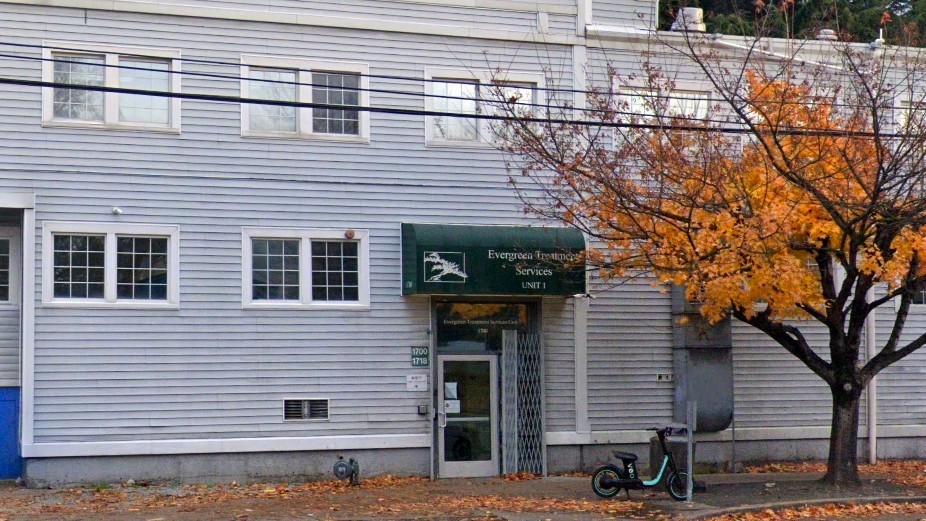
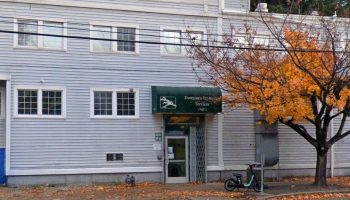
Evergreen Treatment Services Seattle Clinic |
1700 Airport Way South Seattle, WA 98134 |
Detox Service Setting
Outpatient Detox
|
Levels Of Care
OutpatientDual Diagnosis
|
|
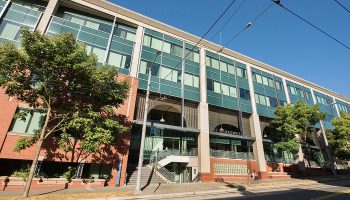
Harborview Medical Center Addictions |
401 Broadway Seattle, WA 98122 |
Detox Service Setting
Outpatient Detox
|
Levels Of Care
OutpatientDual Diagnosis
|
|
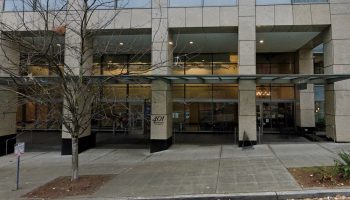
King County Behavioral Health and Recovery Division |
401 5th Avenue Seattle, WA 98104 |
Detox Service Setting
Inpatient DetoxOutpatient DetoxMAT
|
Levels Of Care
InpatientPHPOutpatient+3
|
|
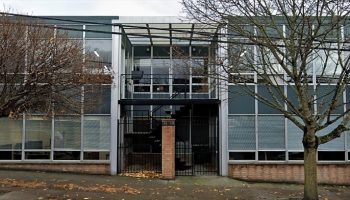
Northbound Treatment Services |
510 2nd Ave W Seattle, WA 98119 |
Detox Service Setting
Inpatient DetoxOutpatient Detox
|
Levels Of Care
InpatientOutpatient
|
|
Northpoint Seattle |
2111 North Northgate Way Seattle, WA 98133 |
Detox Service Setting
Outpatient DetoxMAT
|
Levels Of Care
PHPOutpatientAftercare+2
|
|
Seattle VA Medical Center |
1660 South Columbian Way Seattle, WA 98108 |
Detox Service Setting
Inpatient DetoxOutpatient Detox
|
Levels Of Care
InpatientOutpatientAftercare+1
|
|
Navos Mental Health Solutions Seattle |
2600 SW Holden Street Seattle, WA 98126 |
Detox Service Setting
|
Levels Of Care
|
|
Salvation Army Adult Rehab – Food Distribution Center |
1020 4th Ave S, Seattle, WA 98134 |
Detox Service Setting
Inpatient DetoxOutpatient DetoxMAT
|
Levels Of Care
InpatientOutpatientPHP+2
|
|
Seattle Counseling Services |
2033 6th Avenue Seattle, WA 98121 |
Detox Service Setting
Outpatient Detox
|
Levels Of Care
OutpatientAftercareDual Diagnosis
|
|
Swedish Addiction Recovery |
5300 Tallman Avenue Northwest Seattle, WA 98107 |
Detox Service Setting
Inpatient DetoxMAT
|
Levels Of Care
Inpatient
|
|
UW Medicine Mental Health and Addiction Services at Harborview |
401 Broadway Seattle, WA 98122 |
Detox Service Setting
Inpatient DetoxOutpatient DetoxMAT
|
Levels Of Care
InpatientOutpatient
|
|
Valley Cities Behavioral Health Care: Recovery Place Seattle |
1701 18th Avenue South Seattle, WA 98144 |
Detox Service Setting
Inpatient DetoxMATOutpatient Detox
|
Levels Of Care
InpatientOutpatientIntensive Outpatient
|
|
Hotel California by the Sea |
1601 114th Avenue Southeast Bellevue, WA 98004 |
Detox Service Setting
Inpatient DetoxOutpatient Detox
|
Levels Of Care
InpatientOutpatientDual Diagnosis+1
|
|
Associated Behavioral Health Care Bellevue |
1800 112th Avenue Northeast Bellevue, WA 98004 |
Detox Service Setting
Outpatient Detox
|
Levels Of Care
OutpatientAftercareDual Diagnosis
|
|
Hazelden Betty Ford Foundation |
1231 116th Ave NE Bellevue, WA 98004 |
Detox Service Setting
Inpatient DetoxOutpatient Detox
|
Levels Of Care
InpatientOutpatient
|

|
Seattle’s detoxification and withdrawal management landscape is shaped by a robust public health response to the fentanyl crisis and heavily emphasizes harm reduction and accessible medication-assisted treatment (MAT).
Regulated at the state level by the Washington State Department of Health (DOH) and the Health Care Authority (HCA), local initiatives are deeply integrated with Public Health – Seattle and King County.
The region is currently focused on the Crisis Care Centers levy. This is an initiative designed to build a new network of mental health and substance use facilities to relieve overburdened emergency rooms.
When searching for detox in Seattle, geography and transportation are crucial factors. High-demand safety-net providers like the Downtown Emergency Service Center (DESC) and Evergreen Treatment Services are centrally located, making them accessible via King County Metro and Link Light Rail.
However, bed availability for inpatient detox remains highly competitive, often requiring active coordination with outreach workers, daily check-ins or early morning arrivals at intake facilities.
Recent local strategies focus heavily on low-barrier MAT access to combat the toxic drug supply. Initiatives include expanding the county’s 24/7 Buprenorphine Prescribing Line and integrating street medicine teams to initiate treatment for unhoused populations directly in encampments.
Additionally, King County has scaled up post-overdose outreach programs, deploying mobile crisis teams to connect overdose survivors with immediate detox and stabilization services right in the community.
Understanding the cost of drug detox in Seattle is a priority. It varies based on the level of care, severity of withdrawal and the treatment setting. Medical complexity and prescribed medications also affect the total cost. Fortunately, Washington’s strong insurance parity laws and public funding options help reduce out-of-pocket expenses.
The cost of detox in Seattle depends on whether you are seeking acute medical stabilization in a hospital, residential care or an outpatient program. Out-of-pocket costs are heavily influenced by insurance coverage, length of stay and specific medication needs. Washington State provides robust public health funding that offsets costs for many residents.
Outpatient MAT programs combine prescribed medications with counseling and support, allowing you to manage recovery while maintaining daily responsibilities. Outpatient MAT costs are primarily influenced by the prescribed medication.
Washington State enforces strict mental health and substance use parity laws, requiring private insurers to cover detox and addiction treatment equivalently to medical and surgical benefits.
The Washington State Office of the Insurance Commissioner oversees compliance, ensuring plans sold on the Washington Healthplanfinder marketplace provide comprehensive behavioral health benefits. The most common commercial insurance companies in Seattle include:
Medicare covers inpatient and outpatient detox services in Seattle, as well as MAT drugs like methadone and buprenorphine under Part B. Coverage specifics, deductibles and copays depend on whether you have Original Medicare or a Medicare Advantage plan.
Washington Apple Health (Medicaid) provides comprehensive, low-barrier coverage for substance use disorder treatment including inpatient detox, outpatient services and MAT. For eligible low-income Seattle residents, Apple Health typically covers these services with zero or minimal out-of-pocket costs.
Do not let cost be a reason for not receiving Seattle alcohol rehab or drug detox. There are several ways to pay for addiction treatment without private health insurance:

Federally Qualified Health Centers (FQHCs) like Neighborcare Health and Sea Mar Community Health Centers offer medical services including outpatient addiction support, using a sliding fee scale based on federal poverty guidelines.
Faith-based and secular organizations, such as Seattle’s Union Gospel Mission and the Salvation Army Adult Rehabilitation Center, provide recovery programs and stabilization support regardless of a person’s ability to pay.
King County’s MIDD (Mental Illness and Drug Dependency) initiative uses sales tax revenue to fund local behavioral health programs, enabling low-income or uninsured residents to access vital outreach and stabilization services.
The Seattle Indian Health Board provides culturally appropriate substance use disorder treatment including MAT and outpatient counseling, utilizing specialized federal and state funding for the urban Indigenous community.
Here are the key regulatory and accreditation bodies that oversee detox and withdrawal management services in Seattle and Washington State:
The DOH is the primary state agency responsible for licensing and regulating behavioral health agencies including residential and outpatient detox facilities, ensuring they meet strict health, safety and clinical standards.
The HCA administers Apple Health (Medicaid) and manages the state’s block grant funding for substance use disorder programs, effectively shaping the clinical and financial regulations for low-income treatment access.
While the state handles facility licensing, this local health department monitors overdose data, manages harm reduction programs and distributes funding to community-based organizations that provide essential detox and MAT services locally.
Medication-assisted treatment in Seattle is heavily supported by state and local health policies aimed at lowering barriers to entry. Washington State has expanded telehealth prescribing and removed many prior authorization hurdles for MAT medications to combat the overdose crisis.
Highly accessible across Seattle, buprenorphine can be prescribed via telehealth—including King County’s 24/7 prescribing line—and administered in low-barrier clinics or directly by street medicine teams.
Regulated federally and dispensed through certified Opioid Treatment Programs (OTPs) like Evergreen Treatment Services. Washington state has actively worked to increase the number of mobile methadone vans to improve local access.
Available as a daily pill or monthly injection (Vivitrol), it is non-addictive and widely prescribed by primary care providers without the stringent federal regulations required for methadone.
Seattle has historically been a pioneer in harm reduction, adopting a public health approach to substance use that prioritizes keeping people alive and reducing the transmission of blood-borne diseases.
The city and King County operate a vast network of services providing naloxone (Narcan), fentanyl testing strips, clean syringes and low-barrier medical care. These services play a critical role in overdose prevention and serve as a vital bridge to detox and recovery.
drug checking. PHRA is a user-run organization providing extensive harm reduction supplies and low-barrier buprenorphine programs across Seattle, focusing heavily on destigmatizing drug use and empowering marginalized communities.
ETS combines clinical MAT services with aggressive street-level outreach. Their REACH team connects unhoused individuals in Seattle with medical care, harm reduction supplies and pathways to housing and detox.
DESC focuses on chronic homelessness and severe behavioral health disorders, integrating harm reduction principles directly into their housing models to keep vulnerable populations safe and connected to care.
Operating at multiple fixed sites and mobile vans throughout the county, this government-run program reduces disease transmission and provides direct referrals to detox and MAT providers.
Despite a historically severe opioid crisis driven by fentanyl, recent public health interventions in Seattle and King County are beginning to show positive results. However, the illicit drug supply remains highly toxic and unpredictable.
According to Public Health – Seattle & King County, the number of fatal drug overdoses in the county declined by roughly 31 percent between the peak in 2023 and late 2025.
Of the 796 fatal overdoses confirmed in King County through late 2025, 564 involved fentanyl, highlighting its continued dominance in the local illicit drug supply.
In 2023, King County Emergency Medical Services responded to 868 non-fatal opioid overdoses among youth aged 11 to 24, underscoring the severe impact of the crisis on young people.
King County residents can access a 24/7 Buprenorphine Prescribing Line by calling a dedicated local number. A physician will assess your symptoms over the phone and can immediately call in a buprenorphine prescription to a local Seattle pharmacy to help manage withdrawal.
Yes, Washington Apple Health provides comprehensive coverage for substance use disorder treatments including inpatient detox, residential rehab and outpatient MAT. For eligible low-income individuals, these services are typically covered with zero or minimal out-of-pocket costs.
Ricky’s Law (the Involuntary Treatment Act) allows designated crisis responders in Washington to involuntarily commit adults and youth to secure withdrawal management facilities if their substance use presents an imminent likelihood of serious harm to themselves or others.
Yes, organizations like the Downtown Emergency Service Center (DESC) and Evergreen Treatment Services’ REACH team specialize in assisting Seattle’s unhoused population. They provide street medicine, low-barrier MAT and navigation assistance to access state-funded detox beds.
Yes, fentanyl testing strips and naloxone are widely available for free across Seattle. You can obtain them from the Public Health – Seattle & King County Needle Exchange, the People’s Harm Reduction Alliance and various other community outreach vans.