

 800-262-4205
BEAVER COUNTY VA OUTPATIENT CLINIC

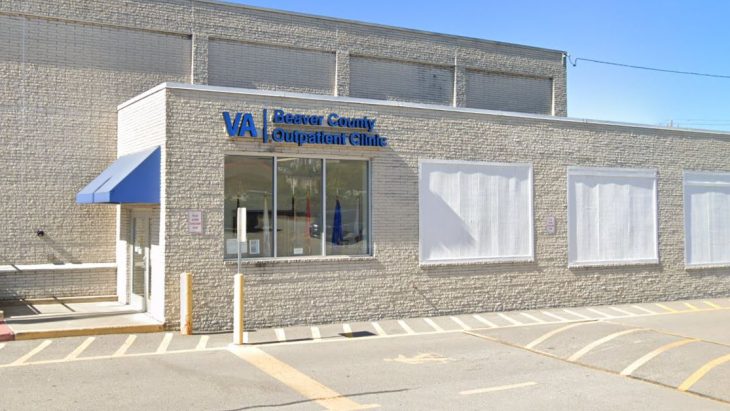
About BEAVER COUNTY VA OUTPATIENT CLINIC
At Beaver County VA Clinic, Veterans can find care to reclaim their health and live life to the fullest. This integrated outpatient clinic is just steps away from Beaver River and Rochester Riverfront Park in downtown Rochester, Pennsylvania. They’re about half a mile west of Rochester–Monaca Bridge.
Their services cut across primary medical care, HIV/hepatitis testing and mental health care including substance use disorders. Specialized services are available for some of the most vulnerable members of the Veteran community, including LGBTQ+, minority, and women Veterans. The facility also offers support for intimate partner violence, whether physical, sexual or emotional.
They accept Medicare, Medicaid, and TRICARE alongside several commercial insurances. Financial assistance is available for those eligible. Many past clients report having an excellent experience with their care providers.
Integrated & Medication Supported Addiction Recovery
Substance use recovery is a core component of outpatient mental health care. They help you navigate co-occurring mental health issues like depression, anxiety and trauma. Services include consultations, personalized care planning and therapy. The goal is to equip you with practical tools to manage daily life challenges that trigger substance use and help prevent relapse.
They may prescribe FDA-approved medications to curb cravings and ease withdrawal symptoms for opioid use issues. Known as medication assisted treatment (MAT), this method pairs medication prescription with counseling. Clients may receive psychotherapy and medication management to tackle underlying psyche issues. Domestic violence counseling may also be included.
HIV/hepatitis testing and counseling are important preventive services that may be part of your recovery. This is especially if you inject IV drugs, as this increases your risk of these infections from sharing needles.
Your care providers will connect you to VA community services to tackle varying needs from employment to housing, transportation, and legal support.
| Levels of Care | Detox Service Setting | Programs | Payment Options | |||||||
|---|---|---|---|---|---|---|---|---|---|---|
|
Inpatient and residential programs provide round-the-clock medical and emotional support as you live at the treatment facility. This level of care may be recommended if you have severe addictions or mental health conditions, because it offers a distraction-free environment where you can focus solely on recovery. |
Outpatient therapy involves attending therapy sessions several times each week while living at home. This is suitable if you have a strong support system and a lower risk of relapse. Outpatient treatment offers flexibility to maintain other obligations such as work or school. |
Aftercare programs provide ongoing support for those who have completed a rehab program. These supports may include therapy, community groups and relapse prevention strategies. These resources give you a network of support as you reintegrate into daily life. |
Dual diagnosis programs address substance use disorders and co-occurring mental health conditions simultaneously. By addressing the root cause of addiciton, this approach improves the likelihood of long-term recovery and stability. |
An intervention is a structured, professionally-guided conversation with an individual who is struggling with addiction. The goal is to encourage the individual to seek treatment. This is often a pivotal point for those resistant to getting help. |
Intensive Outpatient
|
|||||
|
Inpatient detox occurs in a dedicated treatment facility. Participants live at the facility around the clock and receive intensive medical support and supervision to help alleviate withdrawal symptoms. This setting is suitable for individuals with moderate to severe addictions, as it ensures a stable detox environment. |
Outpatient detox provides access to medically supervised withdrawal services while still allowing the individual to live at home. Treatment and monitoring are provided. This flexible option is suitable for those with mild to moderate withdrawal symptoms who have strong support systems. |
Medication assisted treatment combines medication and counseling to manage withdrawal and reduce cravings for opioid and alcohol addiction. Medications may include methadone, buprenorphine or naltrexone. MAT is tailored to your needs so you can actively participate in your treatment journey. |
||||||||
|
Adult programs address the substance use and life challenges specific to adults. Therapists often deliver sessions in individual, group, and family settings. Job support and life skills training can also be provided.
|
Cognitive behavioral therapy focuses on changing harmful thought patterns and behaviors associated with addiction. Participants learn healthier coping mechanisms by identifying and replacing negative thoughts. This improves emotional resilience and lowers the risk of relapse.
|
LGBTQ-friendly programs create an inclusive and affirming space for recovery. Treatment is sensitive to issues like discrimination and stigma. Participants receive support and therapy that respects and acknowledges your unique experiences.
|
Men's programs address substance use issues as well as social pressures, family roles, and mental health concerns that are specific to men. Participants learn healthy coping mechanisms, emotional resilience, and communication skills.
|
Military / Veterans
|
Senior programs address the unique needs of older adults, such as chronic pain and grief. Programs include peer support and medical oversight for age-related health concerns. The goal of these programs is to improve quality of life and promote sobriety as people age.
|
Women's programs offer a safe and supportive space to focus on gender-specific issues such as trauma, family roles, and mental health conditions. Therapy sessions address women's needs and foster empowerment in a healing and nurturing environment.
|
Young adult programs are designed for individuals who are transitioning into adulthood. Discussion topics typically include identity, independence, and peer relationships. Participants may also receive life skills training and career support.
|
Alcohol detox programs offer medical support to help individuals withdraw safely from alcohol. Your care team may use medications to ease your symptoms and provide medical monitoring to address complications. |
Drug detox programs support individuals who are withdrawing from addictive substances like cocaine and heroin. Medical support helps you manage symptoms in a controlled and safe environment so you can achieve initial sobriety. |
Opioid detox uses medications to ease severe withdrawal symptoms. It also includes medical supervision to help you manage potential complications. These services allow you to stabilize and begin a recovery plan. |
|
Payment Assistance
|
Medicare
|
Military Insurance
|
Private Insurance
|
Self Pay
|
Levels of Care
Inpatient and residential programs provide round-the-clock medical and emotional support as you live at the treatment facility. This level of care may be recommended if you have severe addictions or mental health conditions, because it offers a distraction-free environment where you can focus solely on recovery.
Outpatient therapy involves attending therapy sessions several times each week while living at home. This is suitable if you have a strong support system and a lower risk of relapse. Outpatient treatment offers flexibility to maintain other obligations such as work or school.
Aftercare programs provide ongoing support for those who have completed a rehab program. These supports may include therapy, community groups and relapse prevention strategies. These resources give you a network of support as you reintegrate into daily life.
Dual diagnosis programs address substance use disorders and co-occurring mental health conditions simultaneously. By addressing the root cause of addiciton, this approach improves the likelihood of long-term recovery and stability.
An intervention is a structured, professionally-guided conversation with an individual who is struggling with addiction. The goal is to encourage the individual to seek treatment. This is often a pivotal point for those resistant to getting help.
Detox Service Setting
Inpatient detox occurs in a dedicated treatment facility. Participants live at the facility around the clock and receive intensive medical support and supervision to help alleviate withdrawal symptoms. This setting is suitable for individuals with moderate to severe addictions, as it ensures a stable detox environment.
Outpatient detox provides access to medically supervised withdrawal services while still allowing the individual to live at home. Treatment and monitoring are provided. This flexible option is suitable for those with mild to moderate withdrawal symptoms who have strong support systems.
Medication assisted treatment combines medication and counseling to manage withdrawal and reduce cravings for opioid and alcohol addiction. Medications may include methadone, buprenorphine or naltrexone. MAT is tailored to your needs so you can actively participate in your treatment journey.
Programs
Alcohol detox programs offer medical support to help individuals withdraw safely from alcohol. Your care team may use medications to ease your symptoms and provide medical monitoring to address complications.
Drug detox programs support individuals who are withdrawing from addictive substances like cocaine and heroin. Medical support helps you manage symptoms in a controlled and safe environment so you can achieve initial sobriety.
Opioid detox uses medications to ease severe withdrawal symptoms. It also includes medical supervision to help you manage potential complications. These services allow you to stabilize and begin a recovery plan.
Amenities
Accreditations


Contact



Chika Uchendu has expertise in personal finance, technology, and health. His journalism and digital marketing background enables him to combine data-driven analysis with engaging storytelling. Chika uses his voice to drive awareness and meaningful change among people dealing with the pandemic of substance use disorder. Chika is an ambivert who enjoys sports, hiking, reading, and video gaming.

Peter W.Y. Lee is a historian with a focus in American Cold War culture. He has examined how popular culture has served as a coping mechanism for the challenges and changes impacting American society throughout the twentieth century.
Detox.com regularly reviews this listing for accuracy but changes may occur between updates. For the most up-to-date information, please contact BEAVER COUNTY VA OUTPATIENT CLINIC.
Nearby Detox Centers
Search by Pennsylvania Cities
FAQs
What outpatient detox and medication services does Beaver County VA Clinic provide?
The Beaver County VA Outpatient Clinic in Rochester, Pennsylvania provides outpatient detoxification and medication-assisted treatment (MAT) for Veterans with substance use disorders. Services include counseling, medications such as buprenorphine, methadone, and naltrexone, and treatment planning tailored to individual needs. The clinic offers both standard outpatient care and intensive outpatient programming.
Does the VA clinic treat alcohol, opioid, and drug detox for Veterans?
Yes, the Beaver County VA Clinic treats Veterans with alcohol use problems, opioid use disorder, and drug use issues. The medical team provides evidence-based therapies, medication options, and counseling to address these substance use problems. Treatment plans are individualized and may combine medications, one-on-one counseling, and group support.
Can the Beaver County VA Clinic treat substance use and mental health conditions together?
The clinic offers integrated care for Veterans who have both substance use problems and mental health conditions such as PTSD, depression, or anxiety. The care team, which includes addiction therapists, social workers, psychologists, and psychiatrists, creates treatment plans that address both conditions simultaneously through coordinated behavioral health services.
What are the hours and location of the Beaver County VA outpatient clinic?
The Beaver County VA Outpatient Clinic is located at 300 Brighton Avenue, Suite 110, in Rochester, Pennsylvania 15074. The clinic operates Monday through Friday from 8:00 a.m. to 4:30 p.m. ET. The facility offers free parking, wheelchair accessibility, and private transportation options to help Veterans access detox and substance use services.
Does the Beaver County VA Clinic offer telehealth for substance use treatment?
The Beaver County VA Clinic provides virtual care options for some substance use services, allowing Veterans to receive treatment from home or another location using a phone or computer. This option may be available depending on the specific service and the Veteran’s individual treatment plan and clinical needs.