

 800-262-4205
Bon Secours Community Hospital
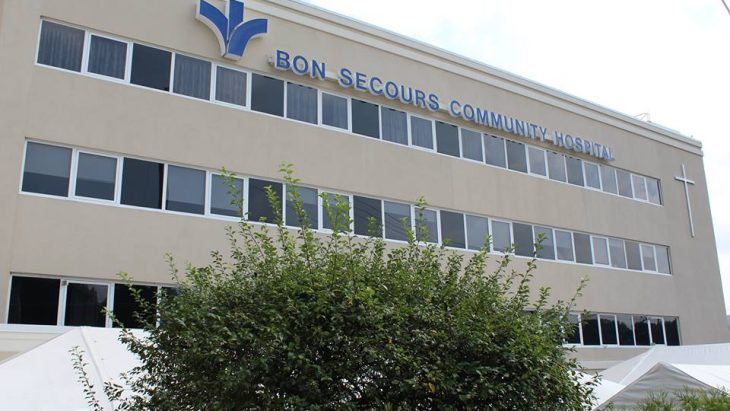
About Bon Secours Community Hospital
The New Directions Program utilizes a multidisciplinary treatment team consisting of psychiatrists, nurses, case managers, social workers, and CASAC counselors.
The integrated treatment program encourages recovery of both dependence and mental illness through daily educational and therapeutic activity groups, individual and group therapy, 12-step and relapse prevention, orientation and family/collateral involvement. An understanding of how chemical dependency and mental illness are inter-related can increase a patient’s chances for a sustained recovery. Medication monitoring, relaxation training, solution-focused approaches and spirituality combined with a competently trained staff reinforce the recovery process.
The average length of stay is 4 days for detoxification and 28 days for rehabilitation. Patients must be 18 years of age or older. Most major insurance, including Medicaid and Medicare, is accepted. For intake screening, call 845.858.7234.
The New Directions Program is dually licensed by the New York State Office of Alcoholism and Substance Abuse for inpatient detoxification and rehabilitation services. All of Bon Secours Community Hospital’s behavioral health services are accredited by the Joint Commission on Accreditation of Healthcare Organizations (JCAHO).
| Levels of Care | Detox Service Setting | Programs | Payment Options | |||
|---|---|---|---|---|---|---|
|
Inpatient and residential programs provide round-the-clock medical and emotional support as you live at the treatment facility. This level of care may be recommended if you have severe addictions or mental health conditions since it removes outside distractions and allows you to focus solely on therapy. |
In outpatient therapy, you’ll attend therapy sessions several times each week while living at home. This is ideal if you have a strong support system and a lower risk of relapse. Outpatient treatment offers flexibility to maintain work, school or family obligations. |
Dual diagnosis programs address substance use disorders and co-occurring mental health conditions simultaneously. This integrated approach to care improves the likelihood of long term recovery and stability by addressing the root causes of addiction. |
Aftercare programs provide ongoing support after you complete a rehab program. They may include several components to help you maintain sobriety including therapy, community support groups and relapse prevention strategies. This gives you a network of resources as you reintegrate into your daily life. |
|||
|
Hospital detoxification allows you to withdraw from drugs or alcohol in a hospital setting. It’s ideal for people with severe withdrawal symptoms or complex medical needs. You’ll receive constant monitoring, emergency care if needed and FDA approved prescription medications. |
Inpatient detox occurs in a dedicated treatment facility. You’ll live there around the clock and receive intensive medical support and supervision to help manage your withdrawal symptoms. It is suitable for individuals with moderate to severe addictions as it ensures a stable detox environment. |
The facility offers outpatient chemical dependency services through its Drug Treatment program, which provides individual and group treatment to adult men and women with chemical dependency. |
||||
|
Adult programs address the substance use and life challenges specific to adults. Therapists can deliver sessions in individual, group and family settings. Services often include job support and life skills training in a structured environment. |
Young adult programs are designed for individuals who are transitioning into adulthood. Topics of discussion typically include identity, independence and peer relationships. Providers may also offer life skills training and career support. |
Senior programs address the unique needs of older adults like chronic pain, grief and isolation. Programs include peer support and medical oversight for age related health concerns. The goal is to improve quality of life and promote sober aging. |
Women's programs offer a safe and supportive space to focus on gender specific issues such as trauma, family roles and mental health conditions. Therapists tailor the sessions to address women's needs and foster empowerment in a healing and nurturing environment. |
Men's programs address substance use while also considering the social pressures, family roles and mental health concerns that are specific to men. You’ll learn healthy coping mechanisms as you build emotional resilience and develop communication skills. |
The facility's Drug Treatment program helps patients stop their use of alcohol and other drugs, develop support systems and relapse prevention skills through chemical dependency treatment with group counseling. |
Bon Secours Community Hospital's chemical dependency services support patients stopping use of alcohol and other drugs as part of integrated behavioral health programming. |
|
Medicaid
|
Medicare
|
State Family Services
|
Private Insurance
|
Levels of Care
Inpatient and residential programs provide round-the-clock medical and emotional support as you live at the treatment facility. This level of care may be recommended if you have severe addictions or mental health conditions since it removes outside distractions and allows you to focus solely on therapy.
In outpatient therapy, you’ll attend therapy sessions several times each week while living at home. This is ideal if you have a strong support system and a lower risk of relapse. Outpatient treatment offers flexibility to maintain work, school or family obligations.
Dual diagnosis programs address substance use disorders and co-occurring mental health conditions simultaneously. This integrated approach to care improves the likelihood of long term recovery and stability by addressing the root causes of addiction.
Aftercare programs provide ongoing support after you complete a rehab program. They may include several components to help you maintain sobriety including therapy, community support groups and relapse prevention strategies. This gives you a network of resources as you reintegrate into your daily life.
Detox Service Setting
Hospital detoxification allows you to withdraw from drugs or alcohol in a hospital setting. It’s ideal for people with severe withdrawal symptoms or complex medical needs. You’ll receive constant monitoring, emergency care if needed and FDA approved prescription medications.
Inpatient detox occurs in a dedicated treatment facility. You’ll live there around the clock and receive intensive medical support and supervision to help manage your withdrawal symptoms. It is suitable for individuals with moderate to severe addictions as it ensures a stable detox environment.
The facility offers outpatient chemical dependency services through its Drug Treatment program, which provides individual and group treatment to adult men and women with chemical dependency.
Programs
Adult programs address the substance use and life challenges specific to adults. Therapists can deliver sessions in individual, group and family settings. Services often include job support and life skills training in a structured environment.
Young adult programs are designed for individuals who are transitioning into adulthood. Topics of discussion typically include identity, independence and peer relationships. Providers may also offer life skills training and career support.
Senior programs address the unique needs of older adults like chronic pain, grief and isolation. Programs include peer support and medical oversight for age related health concerns. The goal is to improve quality of life and promote sober aging.
Women's programs offer a safe and supportive space to focus on gender specific issues such as trauma, family roles and mental health conditions. Therapists tailor the sessions to address women's needs and foster empowerment in a healing and nurturing environment.
Men's programs address substance use while also considering the social pressures, family roles and mental health concerns that are specific to men. You’ll learn healthy coping mechanisms as you build emotional resilience and develop communication skills.
The facility's Drug Treatment program helps patients stop their use of alcohol and other drugs, develop support systems and relapse prevention skills through chemical dependency treatment with group counseling.
Bon Secours Community Hospital's chemical dependency services support patients stopping use of alcohol and other drugs as part of integrated behavioral health programming.
Amenities
The Adult Inpatient Psychiatric Unit features 15 private rooms designed to meet the needs of individuals requiring hospitalization for acute psychiatric illness.
Accreditations

Contact


- Monday Open 24 hours
- Tuesday Open 24 hours
- Wednesday Open 24 hours
- Thursday Open 24 hours
- Friday Open 24 hours
- Saturday Open 24 hours
- Sunday Open 24 hours
Nearby Detox Centers
Search by New York Cities
FAQs
Does Bon Secours Community Hospital offer inpatient detox for alcohol and drug withdrawal?
Yes, Bon Secours Community Hospital in Port Jervis, NY provides inpatient detoxification services through its Adult Inpatient Psychiatric Unit, a 15-bed facility with private rooms. The hospital’s Drug Treatment program addresses both alcohol and drug dependency in an integrated hospital setting.
What detox and treatment services are available at Bon Secours Community Hospital?
Bon Secours Community Hospital offers both inpatient and outpatient detoxification services. The facility provides individual and group chemical dependency treatment, family involvement in recovery, psychiatric evaluation, and crisis intervention. The hospital combines behavioral health and substance use services in one integrated program.
Does Bon Secours Community Hospital treat co-occurring mental health and addiction disorders?
Yes, the facility is staffed with licensed psychiatrists, psychologists, social workers, and psychiatric nurses to address both psychiatric illness and chemical dependency. Dual diagnosis evaluation and treatment for behavioral, emotional, and substance use problems are available through the hospital’s integrated mental health and addiction services.
What is included in outpatient detox treatment at Bon Secours Community Hospital?
Outpatient chemical dependency services at Bon Secours Community Hospital include group counseling, individual treatment, family program involvement, and relapse prevention skill development. The program goals focus on helping patients stop alcohol and drug use and return to productive lives.
Who qualifies for detox services at Bon Secours Community Hospital in Port Jervis?
Bon Secours Community Hospital provides detoxification and chemical dependency treatment to adults ages 18 and older. The facility serves adult men and women with chemical dependency, as well as individuals whose lives are adversely affected by someone else’s substance use.