

 800-262-4205
Bailey Recovery Center
About Bailey Recovery Center
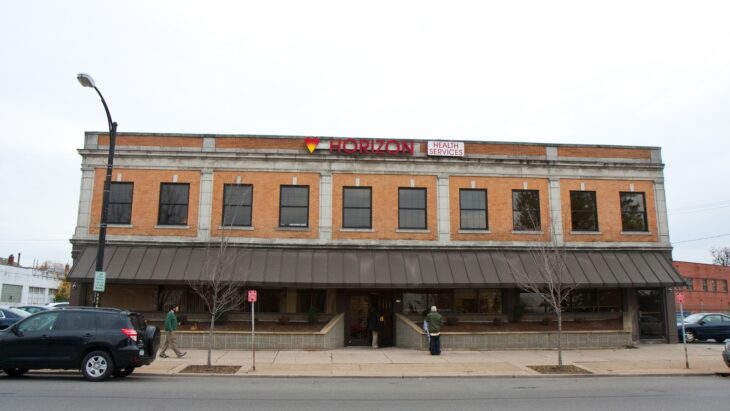
The Bailey Recovery Center is in a nondescript building in a quiet suburban corner of Buffalo, New York. They provide substance abuse and mental health services including medication assisted treatment (MAT). You can book an appointment or walk-in during their open access hours.
They work with many health insurance providers including Amerigroup, Fidelis, Molina, NOVA, Tricare and Aetna Medicare.
Their MAT program gives clients rapid access to medication to help them manage cravings and withdrawal symptoms. These medications treat the physical aspects of addiction so that clients have the bandwidth to deal with the emotional and mental aspect of recovery. Bailey Recovery Center provides various FDA-approved medications to treat substance use disorders including buprenorphine, Vivitrol, and Sublocade. These medications may be taken under the tongue, by injection, or as a skin patch. Your provider will go through all the options with you and make a recommendation based on your history and symptoms.
A core part of MAT is counseling to address the behavioral aspects of addiction. In one-on-one therapy sessions, you’ll process the factors that led to your substance abuse. These sessions will also help you address any underlying mental health issues. You may also participate in family therapy sessions. Here, you’ll work to resolve conflicts and reconcile in a warm and judgment-free space.
I like that they offer a Community Reinforcement and Family Training (CRAFT) program. This helps concerned family members and close friends of people with substance use problems. Addiction impacts relationships and the wellbeing of the addict’s loved ones and this program helps them cope with it. They can also help you start integrating back into your local community.
The Bailey Recovery Center also offers psychiatry services. You can call to make an appointment to explore help with mental health conditions.
| Levels of Care | Detox Service Setting | Programs | Payment Options |
|---|---|---|---|
|
Inpatient and residential programs provide round-the-clock medical and emotional support as you live at the treatment facility. This level of care may be recommended if you have severe addictions or mental health conditions since it removes outside distractions and allows you to focus solely on therapy. |
In outpatient therapy, you’ll attend therapy sessions several times each week while living at home. This is ideal if you have a strong support system and a lower risk of relapse. Outpatient treatment offers flexibility to maintain work, school or family obligations. |
Intensive Outpatient
|
|
|
Inpatient detox occurs in a dedicated treatment facility. You’ll live there around the clock and receive intensive medical support and supervision to help manage your withdrawal symptoms. It is suitable for individuals with moderate to severe addictions as it ensures a stable detox environment. |
Outpatient detox gives you access to medically supervised withdrawal services while still allowing you to live at home. You’ll attend a clinic for treatment and monitoring. This flexible option is suitable for those with mild to moderate withdrawal symptoms who have strong support systems. |
Medication assisted treatment combines medication and counseling to manage withdrawal and reduce cravings for opioid and alcohol addiction. Medications may include methadone, buprenorphine or naltrexone. MAT is tailored to your needs so you can actively participate in your treatment journey. |
|
|
Alcohol detox programs offer medical support to help individuals withdraw safely from alcohol. Your care team may use medications to ease your symptoms and provide medical monitoring to address complications. |
Drug detox programs support individuals who are withdrawing from addictive substances like cocaine and heroin. Medical support helps you manage symptoms in a controlled and safe environment so you can achieve initial sobriety. |
Adult programs address the substance use and life challenges specific to adults. Therapists can deliver sessions in individual, group and family settings. Services often include job support and life skills training in a structured environment. |
Opioid detox uses medications to ease severe withdrawal symptoms. It also includes medical supervision to help you manage potential complications. These services allow you to stabilize and begin a recovery plan. |
|
Private Insurance
|
Self Pay
|
Medicaid
|
Medicare
|
Levels of Care
Inpatient and residential programs provide round-the-clock medical and emotional support as you live at the treatment facility. This level of care may be recommended if you have severe addictions or mental health conditions since it removes outside distractions and allows you to focus solely on therapy.
In outpatient therapy, you’ll attend therapy sessions several times each week while living at home. This is ideal if you have a strong support system and a lower risk of relapse. Outpatient treatment offers flexibility to maintain work, school or family obligations.
Detox Service Setting
Inpatient detox occurs in a dedicated treatment facility. You’ll live there around the clock and receive intensive medical support and supervision to help manage your withdrawal symptoms. It is suitable for individuals with moderate to severe addictions as it ensures a stable detox environment.
Outpatient detox gives you access to medically supervised withdrawal services while still allowing you to live at home. You’ll attend a clinic for treatment and monitoring. This flexible option is suitable for those with mild to moderate withdrawal symptoms who have strong support systems.
Medication assisted treatment combines medication and counseling to manage withdrawal and reduce cravings for opioid and alcohol addiction. Medications may include methadone, buprenorphine or naltrexone. MAT is tailored to your needs so you can actively participate in your treatment journey.
Programs
Alcohol detox programs offer medical support to help individuals withdraw safely from alcohol. Your care team may use medications to ease your symptoms and provide medical monitoring to address complications.
Drug detox programs support individuals who are withdrawing from addictive substances like cocaine and heroin. Medical support helps you manage symptoms in a controlled and safe environment so you can achieve initial sobriety.
Adult programs address the substance use and life challenges specific to adults. Therapists can deliver sessions in individual, group and family settings. Services often include job support and life skills training in a structured environment.
Opioid detox uses medications to ease severe withdrawal symptoms. It also includes medical supervision to help you manage potential complications. These services allow you to stabilize and begin a recovery plan.
Accepted Insurance
Contact


- Monday 8AM - 6PM
- Tuesday 8AM - 6PM
- Wednesday 8AM - 6PM
- Thursday 8AM - 5PM
- Friday 8AM - 1PM

Mari Mendoza is an Ontario-based writer and facilitator. She has close to 20 years of writing experience and has written web content for a wide range of topic including mental health. She holds an BA in English from University of Toronto.

Peter W.Y. Lee is a historian with a focus in American Cold War culture. He has examined how popular culture has served as a coping mechanism for the challenges and changes impacting American society throughout the twentieth century.
Detox.com regularly reviews this listing for accuracy but changes may occur between updates. For the most up-to-date information, please contact Bailey Recovery Center.
Nearby Detox Centers

Search by New York Cities
FAQs
Does Bailey Recovery Center offer medication-assisted treatment for opioid detox?
Yes, Bailey Recovery Center provides Medication Assisted Treatment (MAT) for opioid use disorder, including both methadone and buprenorphine/Suboxone. The facility combines these medications with individual and group counseling to support withdrawal management and long-term recovery.
What are the treatment levels available at Bailey Recovery Center in Buffalo?
Bailey Recovery Center offers multiple outpatient levels of care, including Intensive Outpatient Program (IOP) and ongoing outpatient counseling. Both levels include medication services, individual and group counseling, case management, and recovery coaching to address opioid use disorder.
Does Bailey Recovery Center accept Medicaid and Medicare for opioid treatment?
Yes, Bailey Recovery Center accepts Medicaid, Medicare, and most private insurance plans. The facility is located at 3020 Bailey Avenue in Buffalo, NY, and can verify insurance coverage during the intake and assessment process.
What counseling and support services does Bailey Recovery Center provide alongside medication?
Bailey Recovery Center offers individual counseling, group counseling, family counseling, case management, and recovery coaching alongside MAT. These services are designed to address both addiction and co-occurring mental health needs as part of comprehensive outpatient treatment.
Can someone access Bailey Recovery Center without an appointment or during urgent need?
Yes, Bailey Recovery Center offers walk-in services for adults seeking treatment. The facility is open Monday through Friday, 8:30am to 4:30pm, and provides care coordination to help individuals access the appropriate level of outpatient or intensive outpatient services.