

 800-262-4205
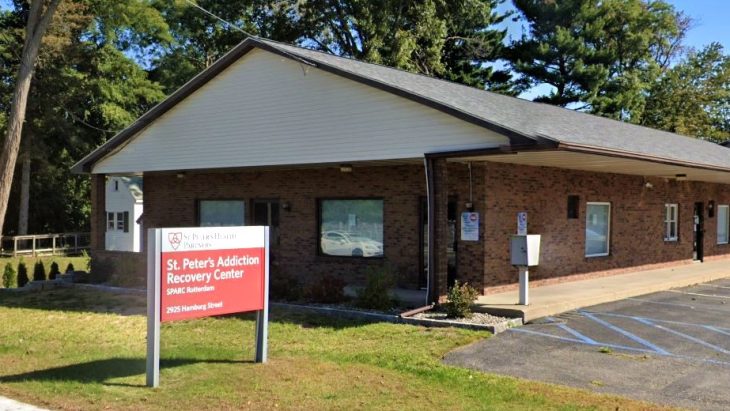
St. Peter’s Addiction Recovery Center

About St. Peter’s Addiction Recovery Center
St. Peter’s Addiction Recovery Center (SPARC) is a leading provider of substance use treatment for people of all ages across New York’s Capital Region. Adults and younger individuals can receive confidential support for substance use issues at any of their eight locations in the area, including Rotterdam. The SPARC Rotterdam clinic is a few blocks from Grout Park and southwest of Central Park Rose Garden in Schenectady.
They’re especially known for keeping care affordable through Medicaid, Medicare and several major insurance plans. A sliding fee discount is available. They’re licensed by OASAS and accredited by The Joint Commission, reflecting a strong commitment to quality care.
Personalized Recovery with Medication Support
Substance use treatment at SPARC’s Rotterdam clinic starts with a full assessment and treatment planning. The clinic offers daytime intensive outpatient group therapy for people who need structure and flexibility in their programs. Day and evening outpatient therapy groups are available.
Medication assisted treatment (MAT) may be part of your personalized care plan. MAT involves the prescription of FDA-approved medications to help manage withdrawal symptoms and alleviate physiological cravings. The clinic also offers individual therapy and family supportive services.
We especially find their Community Reinforcement and Family Therapy (CRAFT) program compelling. CRAFT teaches families how to patiently support loved ones in recovery without fighting, guilt-tripping, or burning out themselves. SPARC’s Brief Intervention and Referral to Treatment (SBIRT) program identifies those at risk for substance use issues and connects them to the right treatment. SPARC Rotterdam also provides court-ordered clinical assessment and treatment for DUI offenders.
| Levels of Care | Detox Service Setting | Programs | Payment Options | |||
|---|---|---|---|---|---|---|
|
Outpatient
|
Dual Diagnosis
|
Intensive Outpatient
|
||||
|
Outpatient detox gives you access to medically supervised withdrawal services while still allowing you to live at home. You’ll attend a clinic for treatment and monitoring. This flexible option is suitable for those with mild to moderate withdrawal symptoms who have strong support systems. |
Medication assisted treatment combines medication and counseling to manage withdrawal and reduce cravings for opioid and alcohol addiction. Medications may include methadone, buprenorphine or naltrexone. MAT is tailored to your needs so you can actively participate in your treatment journey. |
|||||
|
Adult programs include job support and life skills training in a structured environment. Services are designed to address the substance use and life challenges specific to adults. Therapy sessions happen in individual, group and family settings.
|
Alcohol detox programs offer medical support to help individuals withdraw safely from alcohol. Your care team may use medications to ease your symptoms, and they may provide medical monitoring to address complications.
|
LGBTQ-friendly programs create an inclusive and affirming space for recovery. Treatment is sensitive to issues like discrimination and stigma. You’ll receive support and therapy that respects and acknowledges your unique experiences.
|
Men's programs address substance use while also considering the social pressures, family roles, and mental health concerns specific to men. Participants learn healthy coping mechanisms, build emotional resilience, and develop communication skills.
|
Opioid detox uses medications to ease severe withdrawal symptoms. It includes medical supervision to help you manage potential complications. These services allow you to stabilize safely and begin a recovery plan.
|
Women's programs offer a safe and supportive space to focus on gender-specific issues such as trauma, family roles, and mental health conditions. Therapists tailor the sessions to address women's needs and foster empowerment in a healing and nurturing environment.
|
Young adult programs are designed for individuals who are transitioning into adulthood. Topics of discussion typically include identity, independence, and peer relationships. Providers may also offer life-skills training and career support.
|
|
Payment Assistance
|
Medicaid
|
Private Insurance
|
Self Pay
|
Levels of Care
Detox Service Setting
Outpatient detox gives you access to medically supervised withdrawal services while still allowing you to live at home. You’ll attend a clinic for treatment and monitoring. This flexible option is suitable for those with mild to moderate withdrawal symptoms who have strong support systems.
Medication assisted treatment combines medication and counseling to manage withdrawal and reduce cravings for opioid and alcohol addiction. Medications may include methadone, buprenorphine or naltrexone. MAT is tailored to your needs so you can actively participate in your treatment journey.
Programs
Amenities
Accepted Insurance
Contact



Chika Uchendu has expertise in personal finance, technology, and health. His journalism and digital marketing background enables him to combine data-driven analysis with engaging storytelling. Chika uses his voice to drive awareness and meaningful change among people dealing with the pandemic of substance use disorder. Chika is an ambivert who enjoys sports, hiking, reading, and video gaming.

Peter W.Y. Lee is a historian with a focus in American Cold War culture. He has examined how popular culture has served as a coping mechanism for the challenges and changes impacting American society throughout the twentieth century.
Detox.com regularly reviews this listing for accuracy but changes may occur between updates. For the most up-to-date information, please contact St. Peter’s Addiction Recovery Center.
Nearby Detox Centers

Search by New York Cities
FAQs
What outpatient detox services does St. Peter's Addiction Recovery Center offer?
St. Peter’s Addiction Recovery Center in Rotterdam provides outpatient detox and medication-assisted treatment (MAT) for opioid use disorder. The facility offers both Intensive Outpatient Program (IOP) and standard Outpatient Program (OP) levels of care, combining medications like buprenorphine (Suboxone) and naltrexone (Vivitrol) with counseling and behavioral support to help reduce cravings and support recovery.
Does St. Peter's provide medication-assisted treatment for opioid addiction?
Yes, St. Peter’s Addiction Recovery Center offers medication-assisted treatment (MAT) specifically for opioid use disorder. The center provides medications including Suboxone (buprenorphine) and Vivitrol (naltrexone) combined with individual counseling, group counseling, and relapse prevention education as part of its outpatient program.
What substances does St. Peter's Addiction Recovery Center treat?
St. Peter’s Addiction Recovery Center treats opioid use disorder, alcohol addiction, and drug addiction through outpatient services. The facility provides specialized medication-based programming for opioids and counseling-based treatment for alcohol and other substances, with assessment and evaluation available for all individuals with substance use disorders.
What counseling services are included in St. Peter's outpatient programs?
St. Peter’s Addiction Recovery Center includes individual counseling, group counseling, and family counseling as core components of its outpatient treatment. The facility also provides education, relapse prevention instruction, and support groups to help individuals maintain recovery while managing daily responsibilities through its Intensive Outpatient or standard Outpatient programs.
Does St. Peter's treat co-occurring mental health conditions alongside addiction?
St. Peter’s Addiction Recovery Center provides specialized treatment for individuals with co-occurring mental health disorders alongside substance use disorders. This integrated approach is delivered through its outpatient levels of care, allowing the medical team to address both addiction and mental health needs as part of comprehensive recovery support.