

 800-262-4205
WellSpan Philhaven

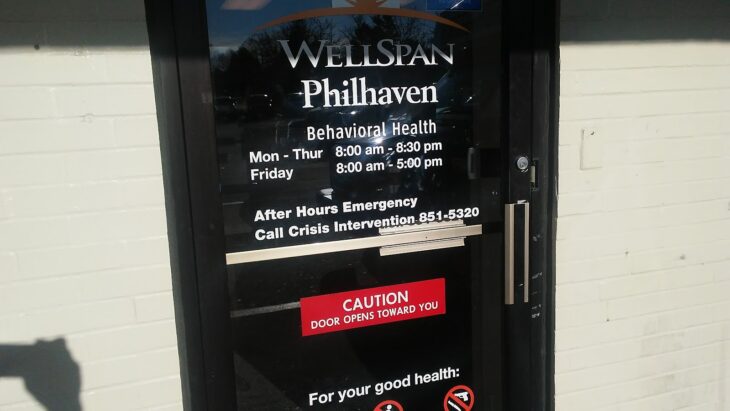
About WellSpan Philhaven
WellSpan Philhaven on Edgar Street offers medication assisted treatment (MAT) for adults facing substance use disorder. Although they offer treatment for a variety of chemical addictions, they focus on treating addiction to opioids. They’re based in the charming York, Pennsylvania, known for being the home of Harley Davidson and the birthplace of animal crackers. They’re right next to the York Memorial Park Complex.
WellSpan does a great job of integrating different areas of treatment to provide a seamless recovery experience. They believe in treating you as a whole person and will look at your medical, social, emotional and spiritual states to provide context for your treatment needs. Their team works together closely and uses technology as a tool to facilitate learning and growth throughout your treatment.
One thingI liked about WellSpan Philhaven is that they help you adjust your lifestyle patterns to better support long term sobriety. This could mean changing the frequency and type of exercise you do, shifting your diet, or even addressing unhealthy sleep patterns.
If you’re in need of non-urgent addiction services, they have a warmline that you can call to ask questions about any of their programs or about addiction in general.
They also provide a lot of support for family members of people facing addiction, including gambling. They know how difficult it can be to watch someone you love experience addiction, and they’re committed to helping you support your loved one while also looking after your own mental health. Depending on your situation and needs, they can focus on educating you on addiction and the typical recovery process, or they can focus on helping you navigate difficulties that come up while supporting your loved one.
| Levels of Care | Detox Service Setting | Programs | Payment Options | |||||||||
|---|---|---|---|---|---|---|---|---|---|---|---|---|
|
Outpatient therapy involves attending therapy sessions several times each week while living at home. This is suitable if you have a strong support system and a lower risk of relapse. Outpatient treatment offers flexibility to maintain other obligations such as work or school. |
Dual diagnosis programs address substance use disorders and co-occurring mental health conditions simultaneously. By addressing the root cause of addiciton, this approach improves the likelihood of long-term recovery and stability. |
Inpatient and residential programs provide round-the-clock medical and emotional support as you live at the treatment facility. This level of care may be recommended if you have severe addictions or mental health conditions since it removes outside distractions and allows you to focus solely on therapy. |
Intensive Outpatient
|
Partial hospitalization programs provide comprehensive treatment in a structured setting during the day but allow you to return home at night. These programs offer a balance of inpatient and outpatient rehab and provide intensive support without full time residency. |
Aftercare programs provide ongoing support after you complete a rehab program. They may include several components to help you maintain sobriety including therapy, community support groups and relapse prevention strategies. This gives you a network of resources as you reintegrate into your daily life. |
|||||||
|
Outpatient detox provides access to medically supervised withdrawal services while still allowing the individual to live at home. Treatment and monitoring are provided. This flexible option is suitable for those with mild to moderate withdrawal symptoms who have strong support systems. |
Inpatient detox occurs in a dedicated treatment facility. You’ll live there around the clock and receive intensive medical support and supervision to help manage your withdrawal symptoms. It is suitable for individuals with moderate to severe addictions as it ensures a stable detox environment. |
Medication assisted treatment combines medication and counseling to manage withdrawal and reduce cravings for opioid and alcohol addiction. Medications may include methadone, buprenorphine or naltrexone. MAT is tailored to your needs so you can actively participate in your treatment journey. |
||||||||||
|
Adult programs address the substance use and life challenges specific to adults. Therapists often deliver sessions in individual, group, and family settings. Job support and life skills training can also be provided.
|
Alcohol detox programs offer medical support to achieve safe withdraw from alcohol. Your care team may use medications to ease withdrawal symptoms. They also provide medical monitoring to address complications.
|
Men's programs address substance use issues as well as social pressures, family roles, and mental health concerns that are specific to men. Participants learn healthy coping mechanisms, emotional resilience, and communication skills.
|
Opioid detox uses medications to ease severe withdrawal symptoms. It also includes medical supervision to manage potential complications. These services allow individuals to stabilize and start a recovery plan.
|
Women's programs offer a safe and supportive space to focus on gender-specific issues such as trauma, family roles, and mental health conditions. Therapy sessions address women's needs and foster empowerment in a healing and nurturing environment.
|
Young adult programs are designed for individuals who are transitioning into adulthood. Discussion topics typically include identity, independence, and peer relationships. Participants may also receive life skills training and career support.
|
Teen (13 - 18)
|
Senior programs address the unique needs of older adults like chronic pain, grief and isolation. Programs include peer support and medical oversight for age related health concerns. The goal is to improve quality of life and promote sober aging. |
LGBTQ friendly programs create an inclusive and affirming space for recovery. Treatment is sensitive to issues like discrimination and stigma. You’ll receive support and therapy that respects and acknowledges your unique experiences. |
Military and veteran programs offer specialized support for clients who served in the armed services. Programs focus on reintegration and healing within a structured and supportive environment that acknowledges the unique struggles of military life. |
Drug detox programs support individuals who are withdrawing from addictive substances like cocaine and heroin. Medical support helps you manage symptoms in a controlled and safe environment so you can achieve initial sobriety. |
Cognitive behavioral therapy focuses on changing harmful thought patterns and behaviors associated with addiction. You’ll learn healthier coping mechanisms by identifying and replacing negative thoughts. This improves your emotional resilience and decreases your relapse potential. |
EMDR stands for eye movement desensitization and reprocessing therapy. It helps you process traumatic memories that may underlie addiction. You’ll learn how to reduce emotional distress and begin healing from past events. This makes it effective for trauma related addiction causes. |
|
Medicaid
|
Medicare
|
Private Insurance
|
Self Pay
|
Military Insurance
|
Sliding Scale Payment
|
Payment Assistance
|
EAP
|
Levels of Care
Outpatient therapy involves attending therapy sessions several times each week while living at home. This is suitable if you have a strong support system and a lower risk of relapse. Outpatient treatment offers flexibility to maintain other obligations such as work or school.
Dual diagnosis programs address substance use disorders and co-occurring mental health conditions simultaneously. By addressing the root cause of addiciton, this approach improves the likelihood of long-term recovery and stability.
Inpatient and residential programs provide round-the-clock medical and emotional support as you live at the treatment facility. This level of care may be recommended if you have severe addictions or mental health conditions since it removes outside distractions and allows you to focus solely on therapy.
Partial hospitalization programs provide comprehensive treatment in a structured setting during the day but allow you to return home at night. These programs offer a balance of inpatient and outpatient rehab and provide intensive support without full time residency.
Aftercare programs provide ongoing support after you complete a rehab program. They may include several components to help you maintain sobriety including therapy, community support groups and relapse prevention strategies. This gives you a network of resources as you reintegrate into your daily life.
Detox Service Setting
Outpatient detox provides access to medically supervised withdrawal services while still allowing the individual to live at home. Treatment and monitoring are provided. This flexible option is suitable for those with mild to moderate withdrawal symptoms who have strong support systems.
Inpatient detox occurs in a dedicated treatment facility. You’ll live there around the clock and receive intensive medical support and supervision to help manage your withdrawal symptoms. It is suitable for individuals with moderate to severe addictions as it ensures a stable detox environment.
Medication assisted treatment combines medication and counseling to manage withdrawal and reduce cravings for opioid and alcohol addiction. Medications may include methadone, buprenorphine or naltrexone. MAT is tailored to your needs so you can actively participate in your treatment journey.
Programs
Senior programs address the unique needs of older adults like chronic pain, grief and isolation. Programs include peer support and medical oversight for age related health concerns. The goal is to improve quality of life and promote sober aging.
LGBTQ friendly programs create an inclusive and affirming space for recovery. Treatment is sensitive to issues like discrimination and stigma. You’ll receive support and therapy that respects and acknowledges your unique experiences.
Military and veteran programs offer specialized support for clients who served in the armed services. Programs focus on reintegration and healing within a structured and supportive environment that acknowledges the unique struggles of military life.
Drug detox programs support individuals who are withdrawing from addictive substances like cocaine and heroin. Medical support helps you manage symptoms in a controlled and safe environment so you can achieve initial sobriety.
Cognitive behavioral therapy focuses on changing harmful thought patterns and behaviors associated with addiction. You’ll learn healthier coping mechanisms by identifying and replacing negative thoughts. This improves your emotional resilience and decreases your relapse potential.
EMDR stands for eye movement desensitization and reprocessing therapy. It helps you process traumatic memories that may underlie addiction. You’ll learn how to reduce emotional distress and begin healing from past events. This makes it effective for trauma related addiction causes.
Amenities
Accreditations


Accepted Insurance
Contact


- Monday 8AM - 7:30PM
- Tuesday 8AM - 7:30PM
- Wednesday 8AM - 7:30PM
- Thursday 8AM - 7:30PM
- Friday 8AM - 4:30PM

Hayley’s love of writing started with exploring the wondrous world of Narnia and slowly grew into a desire to help others through practical, accessible narratives. She writes about detox to bridge the gap between the lost, who aren’t sure where to turn, and the people willing and able to help them.

Peter W.Y. Lee is a historian with a focus in American Cold War culture. He has examined how popular culture has served as a coping mechanism for the challenges and changes impacting American society throughout the twentieth century.
Detox.com regularly reviews this listing for accuracy but changes may occur between updates. For the most up-to-date information, please contact WellSpan Philhaven.
Nearby Detox Centers


Search by Pennsylvania Cities
FAQs
What detox programs does WellSpan Philhaven offer in York, PA?
WellSpan Philhaven in York offers both inpatient and outpatient detox services. The facility provides medical detoxification for alcohol, opioids, and other drugs, along with medication-assisted treatment (MAT) to support withdrawal management and recovery. Clients can choose from inpatient residential detox or outpatient detox depending on their medical needs and circumstances.
Is medical supervision available during detox at WellSpan Philhaven?
Yes, WellSpan Philhaven provides inpatient detox with medical supervision. The facility’s inpatient program includes residential care with nursing and medical staff oversight during the withdrawal process. Outpatient detox is also available for individuals who do not require 24-hour supervision but need clinical support during detoxification.
What insurance does WellSpan Philhaven accept for detox services?
WellSpan Philhaven accepts Medicaid, Medicare, Tricare, and private insurance. The facility also offers sliding scale payments, payment assistance programs, and serves employees through EAP benefits. Self-pay options are available for those without insurance coverage.
Does WellSpan Philhaven treat opioid addiction with medication?
Yes, WellSpan Philhaven offers medication-assisted treatment (MAT) as part of its detox and recovery programs. MAT combines medications with clinical support to manage opioid withdrawal and cravings. The facility integrates MAT into both inpatient and outpatient levels of care.
What age groups and populations does WellSpan Philhaven serve?
WellSpan Philhaven serves teens (ages 13-18), young adults (18-25), adults, and seniors (65+). The facility also operates gender-specific programs for men and women, welcomes LGBTQ clients, and provides specialized services for military personnel and veterans through its military/veterans program.
What happens after detox at WellSpan Philhaven?
After detox, WellSpan Philhaven offers transition care through intensive outpatient programs (PHP), outpatient therapy, and aftercare services. The facility provides dual diagnosis treatment for co-occurring mental health conditions and uses evidence-based therapies like CBT and EMDR to support ongoing recovery.