Find Drug & Alcohol Detox Centers in Laredo, TX

Detox Centers in Laredo

15 Results
Filters
Setting
Medications Offered
Treatment
Programs
Payment Options
Name Address Detox Service Setting Levels Of Care Media

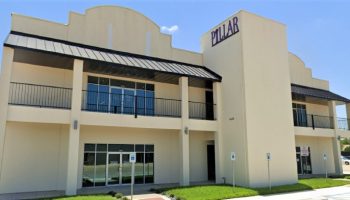
Pillar Strong

6406 McPherson Rd Laredo, TX 78041
Detox Service Setting
Inpatient DetoxOutpatient Detox
Levels Of Care
InpatientOutpatient
Pillar Strong

Serving Children and Adults in Need, Inc. (SCAN)

1605 Saldana Avenue Laredo, TX 78041
Detox Service Setting
Inpatient DetoxOutpatient DetoxMAT
Levels Of Care
InpatientOutpatientDual Diagnosis+2

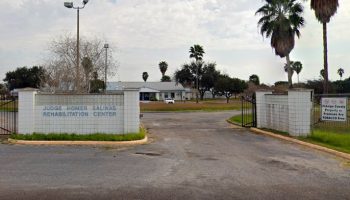
Hidalgo County Substance Abuse Treatment Facility

1000 N M Rd McAllen, TX 78542
Detox Service Setting
Inpatient DetoxOutpatient Detox
Levels Of Care
InpatientOutpatient
Hidalgo County Substance Abuse Treatment Facility

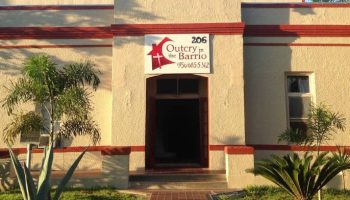
Outcry in The Barrio Pharr

206 E Cherokee Ave Pharr, TX 78577
Detox Service Setting
Inpatient DetoxOutpatient Detox
Levels Of Care
InpatientOutpatient
Outcry in The Barrio Pharr

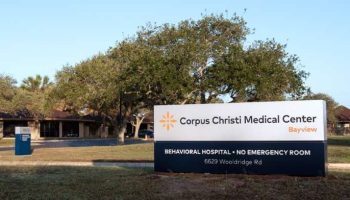
Corpus Christi Medical Center Bayview

6629 Wooldridge Rd Corpus Christi, TX 78414
Detox Service Setting
Levels Of Care
Corpus Christi Medical Center Bayview

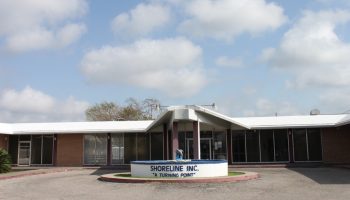
Shoreline Treatment Center

1220 Gregory Street Taft, TX 78390
Detox Service Setting
Inpatient Detox
Levels Of Care
InpatientDual Diagnosis
Shoreline Treatment Center

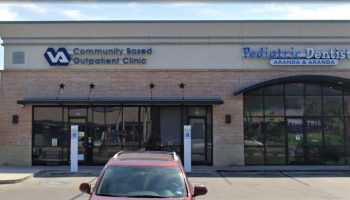
South Texas VA Health Care System San Antonio Southwest Military VA Clinic

1714 Southwest Military Drive San Antonio, TX 78221
Detox Service Setting
Inpatient DetoxOutpatient Detox
Levels Of Care
InpatientOutpatientAftercare+1
South Texas VA Health Care System San Antonio Southwest Military VA Clinic

SOBA Texas

1401 Dezarae San Antonio, TX 78253
Detox Service Setting
Inpatient Detox
Levels Of Care
InpatientAftercareDual Diagnosis
SOBA Texas

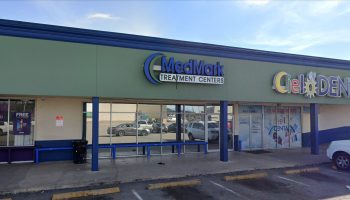
MedMark Treatment Centers San Antonio

7428 Military Drive West San Antonio, TX 78227
Detox Service Setting
Outpatient Detox
Levels Of Care
OutpatientAftercare
MedMark Treatment Centers San Antonio

San Antonio Pecan Valley VA Clinic

4243 East Southcross Boulevard San Antonio, TX 78222
Detox Service Setting
Inpatient DetoxOutpatient Detox
Levels Of Care
InpatientOutpatientAftercare+1
San Antonio Pecan Valley VA Clinic

South Bexar County VA Clinic

4610 East Southcross San Antonio, TX 78222
Detox Service Setting
Inpatient DetoxOutpatient Detox
Levels Of Care
InpatientOutpatientAftercare+1
South Bexar County VA Clinic

New Season Treatment Center San Antonio

3615 Culebra Road San Antonio, TX 78228
Detox Service Setting
Outpatient Detox
Levels Of Care
Outpatient
New Season Treatment Center San Antonio

South Texas Veterans Health Care System

4318 Woodcock Drive San Antonio, TX 78228
Detox Service Setting
Inpatient DetoxOutpatient Detox
Levels Of Care
InpatientOutpatientAftercare+1
South Texas Veterans Health Care System

The Best Option

3700 Fredericksburg Rd #137 San Antonio, TX 78201
Detox Service Setting
Inpatient DetoxOutpatient Detox
Levels Of Care
InpatientOutpatient
The Best Option

STOP SA

571 Spencer Ln San Antonio, TX 78201
Detox Service Setting
Inpatient DetoxOutpatient Detox
Levels Of Care
InpatientOutpatient
STOP SA

Drug & Alcohol Detox in Laredo, TX

Detox and substance use disorder treatment in Laredo is regulated at both the state and federal levels. The Texas Health and Human Services Commission (HHSC) licenses all Chemical Dependency Treatment Facilities (CDTFs) under 26 TAC Chapter 564, setting clinical and safety standards for any program offering medical detoxification.

The Substance Abuse and Mental Health Services Administration (SAMHSA) separately certifies Opioid Treatment Programs (OTPs) such as methadone clinics under 42 CFR Part 8. Facilities that use public funding must also meet HHSC block grant compliance requirements.

Laredo’s position as one of the busiest U.S.-Mexico land ports of entry gives the city a specific overdose risk profile. Illicit fentanyl moves through Webb County in high volumes, contributing to a local overdose death toll that reached 66 within city limits in 2023. In response, the City of Laredo opened ROOTS Recovery Center in 2024, a publicly funded 24-room detox facility at 1300 Chicago St., operated by the city’s Detoxification Department. ROOTS accepts patients meeting DSM-5 substance dependence criteria and serves people regardless of their ability to pay.

When weighing options beyond the public system, start by verifying HHSC licensure, reviewing medication-assisted treatment (MAT) availability, and confirming payment options before arrival. Webb County also operates a Drug Court Program that provides a treatment-track alternative for people with substance use disorders involved in the local criminal justice system, pairing structured accountability with community-based care.
Find The Perfect Detox Center For You

Filter treatment centers in Laredo by level of care offered to find the best detox program for you or a loved one.

Paying for Detox in Laredo

Paying for drug or alcohol detox in Laredo is more manageable than many people expect. Texas Medicaid, private insurance, and a publicly funded city facility all provide pathways to care.

Knowing which options apply to your situation can significantly reduce the time between deciding to seek help and actually starting treatment. The cost of detox varies by level of care, and understanding those ranges upfront is a practical first step.

How Much Does Detox Cost in Laredo?

Detox costs in Laredo depend on the setting, the substances involved, and how much medical supervision is required. Opioid and alcohol withdrawal typically require closer monitoring and more medication than other substances, which raises costs. Most people who use insurance pay significantly less than the list prices below. City-funded and nonprofit options are available for those without coverage.

$3,000 to $8,000 per week
Medical Detox
$7,500 to $17,000 for a 30-day program
Inpatient Rehab
$2,500 to $5,500 per program
Outpatient Rehab
$1,800 to $7,000 per year
Methadone Treatment

Does Private Insurance Cover Detox in Laredo?

Private insurers in Texas must comply with the Affordable Care Act, which requires substance use disorder coverage to be offered on the same terms as other medical benefits. Texas also enforces its own mental health parity standards under House Bill 10 (2017), overseen by the Texas Department of Insurance (TDI).

Residents can verify their benefits by calling the member number on their insurance card or through their plan’s online portal. The most common commercial insurance plans in the Laredo market include:

Blue Cross Blue Shield
United Health Care
Cigna
Ambetter
Molina Healthcare

Medicare and Medicaid in Laredo

Medicare

Medicare covers medically necessary inpatient and outpatient detox in Laredo, including hospital-based withdrawal management under Part A. Part B covers Opioid Treatment Program services, including methadone, buprenorphine, and naltrexone for opioid use disorder. Copays, deductibles, and cost-sharing depend on the specific plan and treatment setting.

Medicaid

Texas Medicaid, known as the STAR (State of Texas Access Reform) managed care program, covers medically supervised detox, inpatient residential care, and outpatient services for qualifying residents. Benefits are administered through managed care plans assigned by county. Contact your assigned STAR plan to confirm which Laredo-area facilities are in-network before seeking admission.

Other Ways to Pay for Detox Treatment

Do not let cost be a barrier to starting detox in Laredo. Several programs exist for people without private insurance or with limited financial resources:

Public / City-Funded Free Detox: 

ROOTS Recovery Center, operated by the City of Laredo’s Detoxification Department at 1300 Chicago St., is funded through city and grant resources and serves patients regardless of ability to pay. Call (956) 688-9800 for current availability and admission criteria.

Sliding Scale Payment Systems: 

South Texas Rural Health Services Inc. serves the broader South Texas region and offers substance use treatment on a sliding fee scale based on household income, with Medicaid also accepted for eligible residents.

Nonprofit Programs: 

SCAN (Serving Children and Adults in Need) provides MAT-based opioid treatment in Laredo at low or no cost for eligible individuals. SCAN accepts Medicaid and provides case management support alongside clinical services.

Veterans Programs: 

Laredo’s VA Community-Based Outpatient Clinic serves eligible veterans. VA benefits cover detoxification, MAT, residential treatment, and outpatient counseling for veterans with substance use disorders, typically at no direct cost.

Webb County Indigent Health Care Program: 

Webb County operates an Indigent Health Care Program for low-income residents who do not qualify for Medicaid but cannot afford private care. Substance use services may be covered through this program for eligible applicants.

Laredo, Texas Regulations and Accreditation for Detox

The regulatory framework governing detox and SUD treatment in Laredo involves state, federal, and local entities working in parallel to set and enforce clinical, safety, and operational standards.

Texas Health and Human Services Commission (HHSC)

This is the primary licensing authority for all Chemical Dependency Treatment Facilities in Texas. HHSC issues and renews CDTF licenses, sets standards under 26 TAC Chapter 564, and conducts on-site compliance inspections. Any Laredo facility providing medical detoxification is required to hold a current HHSC CDTF license with a named Medical Director.

Substance Abuse and Mental Health Services Administration (SAMHSA)

This is the federal agency that certifies Opioid Treatment Programs providing methadone and buprenorphine for opioid use disorder. Under 42 CFR Part 8, OTPs must be SAMHSA-certified and DEA-registered to dispense opioid agonist medications. Any Laredo facility offering daily dispensed methadone for OUD must hold a current SAMHSA certification.

Website: samhsa.gov

Texas Department of Insurance (TDI)

TDI enforces mental health and substance use disorder parity requirements in Texas under House Bill 10 (2017), ensuring private insurers cannot impose stricter limits on SUD treatment than on other medical care. TDI also administers the preauthorization exemption (goldcard) program under HB 3459 (2021), updated by HB 3812 in 2025, which allows qualifying providers to bypass prior authorization requirements for established patients.

City of Laredo Health Department

The local public health authority for Laredo, which maintains a publicly available overdose data dashboard tracking drug poisoning deaths and trends within the city. The Health Department coordinates with the city’s Detoxification Department on community surveillance and public health response, and its data informs local resource allocation decisions.

Key MAT Medications and Regulatory Status in Laredo

Medication-assisted treatment in Laredo is governed by HHSC licensing standards and federal SAMHSA and DEA regulations. Licensed providers offering MAT are expected to integrate counseling and behavioral health services into treatment. Texas Medicaid covers all three FDA-approved OUD medications without requiring prior authorization for most managed care plan members.

Buprenorphine: 

Available through SCAN’s MAT Program at 1605 Saldana Ave (945-724-3177) and from any DEA-licensed physician, following the 2023 federal elimination of the X-waiver requirement. This regulatory change significantly expanded local prescribing capacity and allows patients to begin buprenorphine-based treatment in a standard outpatient setting.

Methadone: 

For opioid use disorder, methadone dispensing is restricted to SAMHSA-certified Opioid Treatment Programs. It cannot be prescribed for OUD through a standard outpatient office. Patients must attend a certified OTP for daily supervised dosing, at least initially, with take-home doses becoming available after meeting program requirements.

Naltrexone: 

Available as an oral tablet or monthly injectable (Vivitrol) with no special clinic or DEA certification requirement. Any licensed provider may prescribe it. Because naltrexone has no addiction potential, the injectable form is widely used in court diversion settings such as the Webb County Drug Court Program, and it is covered by Texas Medicaid.

Overdose Prevention and Harm Reduction in Laredo

Laredo’s border geography makes its drug supply volatile, and illicit fentanyl has been the primary driver of local overdose deaths in recent years. Harm reduction programs and city-level initiatives provide naloxone training, overdose reversal medication, and direct connections to detox and treatment for people who use drugs.

The city’s coordinated response involves law enforcement, public health officials, and nonprofit organizations working together to distribute Narcan and link people to care. By the end of 2024, Laredo saw approximately a 10% decline in fentanyl-related overdose cases compared to 2023, attributed to multi-agency Narcan distribution and the opening of the city’s detox center.

SCAN, Inc. (Serving Children and Adults in Need)

Free naloxone (Narcan) kits and administration training MAT services, including buprenorphine Substance use counseling Case management support

SCAN provides free naloxone kits and hands-on overdose response training to community members in Laredo. As the city’s primary MAT provider, SCAN connects people who use drugs directly to buprenorphine-based treatment at low or no cost, making it an active bridge between harm reduction and clinical care.

Texas Targeted Opioid Response (TTOR) / More Narcan Please

Free naloxone distribution to organizations and individuals statewide Naloxone training for harm reduction organizations, law enforcement, and community groups Technical assistance for overdose prevention programs

HHSC’s Texas Targeted Opioid Response program, administered through UT Health San Antonio’s “More Narcan Please” initiative, ships free naloxone to organizations across Texas. Laredo-area organizations and individuals can request bulk supplies through this statewide program for local distribution.

Laredo Police Department and Webb County Sheriff's Office

Standard-issue Narcan (naloxone) for all responding officers Overdose scene response and on-site naloxone administration Coordination with the city and county fentanyl task force

Both the Laredo Police Department and the Webb County Sheriff’s Office carry Narcan as part of standard equipment. Through the local fentanyl task force, both agencies actively participate in community outreach and have documented multiple overdose reversals through Narcan use at incident scenes.

City of Laredo Health Department Overdose Surveillance

Publicly available overdose data dashboard Coordination with the city's Detoxification Department on response planning Community health improvement planning and reporting

The City of Laredo Health Department publishes an overdose data dashboard tracking drug poisoning deaths and related trends within the city. This real-time surveillance data is used to direct naloxone resources, prevention programming, and treatment capacity to the neighborhoods with the highest need.

Webb County Drug Court Program

Court-supervised substance use treatment as an alternative to incarceration Regular drug testing and structured accountability hearings Connections to community-based recovery services

Webb County’s Drug Court offers a treatment-track option for people with substance use disorders who are involved in the local criminal justice system. Participants complete a structured treatment program with regular court check-ins, significantly reducing the likelihood of incarceration and providing sustained support for recovery.

Detox Statistics in Laredo, Texas

Laredo’s border location and the steady flow of illicit fentanyl through Webb County have kept overdose rates elevated in recent years, though coordinated local efforts are beginning to show measurable results.

66 Overdose Deaths in 2023

Laredo police confirmed 66 overdose deaths within city limits in 2023, one of the highest annual totals the city has recorded.

46% of Texas Overdose Deaths Involve Fentanyl

In 2023, synthetic opioids, primarily fentanyl, were involved in 46% of all drug overdose deaths across Texas, more than any other substance category.

308 People Served by ROOTS in Year One

After its first full year of operation, Laredo’s ROOTS Recovery Center served approximately 308 people ages 18 to 75, with heroin, fentanyl, and prescription medications among the most commonly treated substances.

FAQs About Detox in Laredo, TX

Is ROOTS Recovery Center free to use?

ROOTS Recovery Center is publicly funded and operated by the City of Laredo’s Detoxification Department. The facility serves patients regardless of their ability to pay and does not require private insurance. Medicaid is accepted. Call (956) 688-9800 for current admission procedures and bed availability.

Does Texas Medicaid (STAR) cover detox in Laredo?

Yes. The STAR managed care program covers medically supervised detox, inpatient residential care, and outpatient services for qualifying residents. Coverage is administered through a managed care plan assigned to your zip code in Webb County. Contact your STAR plan directly to confirm which Laredo facilities are currently in-network.

What happens after detox? Is there ongoing care available in Laredo?

Detox addresses the acute physical phase of withdrawal, but recovery requires continuing care. Aftercare options include outpatient counseling, intensive outpatient programs (IOPs), peer support, and long-term MAT. SCAN at 1605 Saldana Ave provides ongoing buprenorphine treatment and counseling, and the Webb County Drug Court Program offers structured post-detox support for eligible individuals.

Are there detox or treatment options in Laredo for people without insurance?

Yes. ROOTS Recovery Center serves patients regardless of insurance status. SCAN provides MAT on a low-cost or no-cost basis and accepts Medicaid. The Webb County Indigent Health Care Program covers some substance use services for low-income residents who do not qualify for Medicaid. South Texas Rural Health Services Inc. also offers care on a sliding fee scale.

How do I get free naloxone (Narcan) in Laredo?

Free naloxone is available from SCAN, Inc., which provides kits and hands-on training to community members at no charge. Texas’s statewide More Narcan Please program (hhs.texas.gov) can also ship naloxone directly to organizations. Narcan nasal spray is additionally available over the counter at local pharmacies without a prescription.

Does Laredo have medication-assisted treatment (MAT) for opioid addiction?

Yes. SCAN’s MAT Program at 1605 Saldana Ave offers buprenorphine-based treatment and counseling for opioid use disorder. Call (945) 724-3177 for intake. ROOTS Recovery Center can also initiate MAT medications as part of inpatient stabilization. Naltrexone injectable (Vivitrol) is available through licensed providers, including those connected to the Webb County Drug Court Program.

Two people talking
Get Help Today!
If you or a loved one is in need of help, call today. Pick up the phone and get the help you need.
800-483-2193
Confidential. Available 24 Hours

Browse Detox Centers

Get Help Today Phone icon 800-779-4314