512-298-6438
Cross Creek Hospital
Austin, TX
78754
Substance abuse has become a serious problem in El Paso, TX, as in many other southwestern cities. Finding treatment for this type of disorder is necessary, and detox can often be a beneficial form of early treatment. Those who seek detox can go through withdrawal in a safe environment before beginning their official addiction treatment.
Let us help you find drug and alcohol detox centers in El Paso, TX today by calling 915-975-9027 .




| Name | Address | Detox Service Setting | Levels Of Care | Media |
|---|---|---|---|---|
Arid Club |
3327 Douglas Ave El Paso, TX 79903 |
Detox Service Setting
Inpatient DetoxOutpatient Detox
|
Levels Of Care
InpatientOutpatient
|

|
El Paso Behavioral Health Main Campus |
10501 Gateway Boulevard West El Paso, TX 79925 |
Detox Service Setting
Outpatient Detox
|
Levels Of Care
OutpatientAftercareDual Diagnosis
|

|
Rio Vista Behavioral Health Hospital |
1390 Northwestern Drive El Paso, TX 79912 |
Detox Service Setting
Inpatient DetoxOutpatient DetoxMAT+1
|
Levels Of Care
InpatientPHPOutpatient+2
|

|
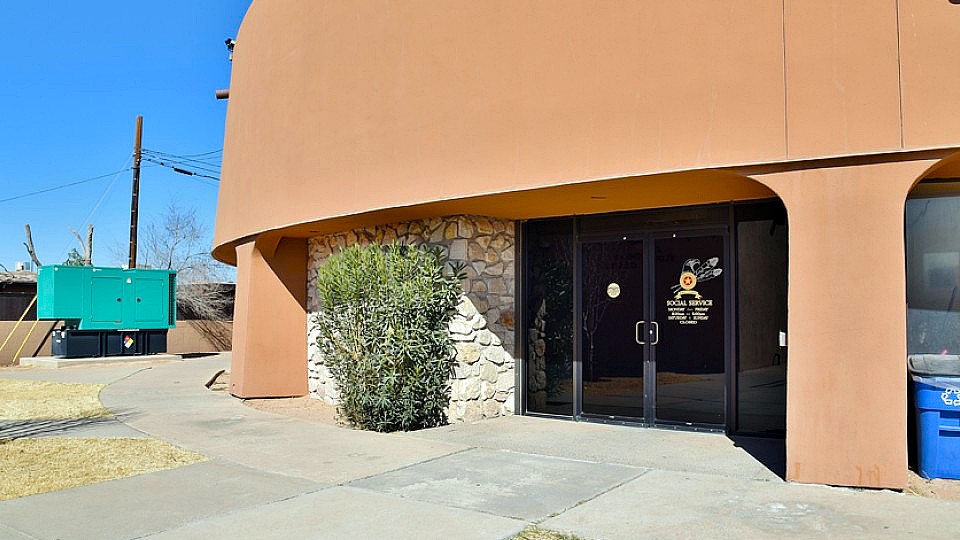
Ysleta del Sur Pueblo Sacred Connections |
9314 Juanchido Lane El Paso, TX 79907 |
Detox Service Setting
Outpatient Detox
|
Levels Of Care
OutpatientDual Diagnosis
|

|
AHX – Addiction Treatment Services |
Wells Fargo Plaza, 221 N Kansas St El Paso, TX 79901 |
Detox Service Setting
Inpatient DetoxOutpatient Detox
|
Levels Of Care
InpatientOutpatient
|
|
Alano Club |
1302 Gail Borden Pl El Paso, TX 79935 |
Detox Service Setting
Inpatient DetoxOutpatient Detox
|
Levels Of Care
InpatientOutpatient
|
|
Aliviane NO/AD Inc Methadone Clinic |
1900 Wyoming Avenue El Paso, TX 79903 |
Detox Service Setting
|
Levels Of Care
|
|
Harmony Road Recovery |
813 N Kansas St Suite 200 El Paso, TX 79902 |
Detox Service Setting
Hospital DetoxInpatient DetoxOutpatient Detox+1
|
Levels Of Care
InpatientOutpatientDual Diagnosis+2
|
|
Homeward Bound Inc Trinity Center/El Paso |
8716 Independence Drive El Paso, TX 79907 |
Detox Service Setting
Inpatient DetoxOutpatient DetoxMAT
|
Levels Of Care
InpatientOutpatientPHP
|
|
New Leaf Wellness Center |
10921 Pellicano Dr El Paso, TX 79935 |
Detox Service Setting
Inpatient DetoxOutpatient Detox
|
Levels Of Care
InpatientOutpatient
|
|
Silver Coast Institute |
100 N Stanton St El Paso, TX 79901 |
Detox Service Setting
Inpatient DetoxOutpatient Detox
|
Levels Of Care
InpatientOutpatient
|
|
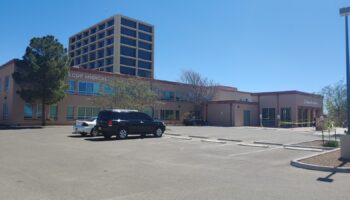
La Clinica de Familia – Central Medical |
575 South Alameda Boulevard Las Cruces, NM 88005 |
Detox Service Setting
Inpatient DetoxOutpatient DetoxMAT
|
Levels Of Care
InpatientOutpatient
|
|
Zia Recovery Center |
303 N Alameda Blvd Las Cruces, NM 88005 |
Detox Service Setting
Inpatient DetoxOutpatient Detox
|
Levels Of Care
InpatientOutpatient
|

|
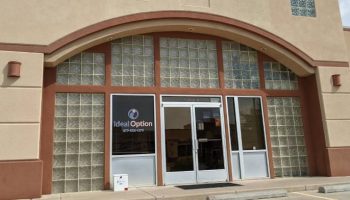
Ideal Option |
532 N Telshor Blvd Las Cruces, NM 88011 |
Detox Service Setting
Inpatient DetoxOutpatient Detox
|
Levels Of Care
InpatientOutpatient
|
|
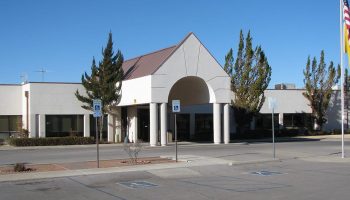
BHC Mesilla Valley Hospital |
3751 Del Rey Boulevard Las Cruces, NM 88012 |
Detox Service Setting
Inpatient DetoxOutpatient Detox
|
Levels Of Care
InpatientDual DiagnosisPHP+2
|
|
El Paso’s location on the U.S.-Mexico border gives this city a distinct profile among Texas treatment markets. The region is a major corridor for fentanyl trafficking, and local providers contend with a drug supply that is more contaminated and unpredictable than in many other Texas cities. That border context shapes both the patient population and the treatment demand.
People seeking detox here should be aware that fentanyl involvement is common across multiple substances, which affects withdrawal severity and the level of medical supervision required.
Drug and alcohol detox programs in El Paso operate under a multilayered licensing structure governed by the Texas Health and Human Services Commission (HHSC). Any facility providing planned substance use disorder treatment, including detoxification services, must hold a Chemical Dependency Treatment Facility (CDTF) license issued by HHSC under Texas Health and Safety Code Chapter 464.
Narcotic Treatment Programs that dispense methadone require a separate NTP license under Chapter 466, along with SAMHSA certification and DEA registration. These requirements apply to both private and publicly funded facilities throughout El Paso County.
El Paso County has publicly funded detox and behavioral health services available through state and county resources, including programs operated by Emergence Health Network (El Paso Community MHMR), which functions as the region’s Local Mental Health Authority and accepts Medicaid.
Furthermore, the El Paso City Council passed an opioid harm reduction resolution in 2023, directing opioid settlement funds toward expanded Narcan access, MAT linkage and community partnerships.
Knowing how to choose a detox center before contacting providers can help you move quickly and ask the right questions about licensing, MAT availability, and insurance coverage.
Detox financing in El Paso follows statewide insurance rules. It is shaped by a large Medicaid-eligible population, significant military and veteran enrollment through Fort Bliss and a network of nonprofit safety-net providers.
So, understanding your options before you call a facility can prevent cost from becoming a barrier to care. Paying with health insurance covers detox in most cases, though the specifics depend on your plan type and whether the facility is in-network.
Detox costs in El Paso vary based on the level of care, the substance involved, the length of stay and facility type. Many residents reduce out-of-pocket costs significantly through Texas Medicaid, private insurance or VA benefits.
Inpatient and hospital-based medical detox carries the highest cost because of round-the-clock medical supervision. On the other hand, outpatient options are considerably less expensive and may be appropriate for lower-risk withdrawals.
Private insurance plans sold in Texas must comply with the Affordable Care Act’s mental health parity provisions, which require substance use disorder treatment benefits to be comparable to those for other medical conditions. The Texas Department of Insurance oversees carrier compliance in the state.
It is a good idea to verify in-network status directly with your insurer and the treatment facility before admission, as provider networks vary significantly in El Paso.
The most widely available commercial insurance carriers in El Paso include:



Medicare covers inpatient and outpatient detox, as well as opioid treatment program (OTP) services, including methadone, buprenorphine and naltrexone under Part B.
Cost-sharing depends on the treatment setting and your specific plan. It is important to be aware that Medicare Advantage plans may require prior authorization.
Texas Medicaid covers medically necessary detox and SUD treatment, including residential detox (typically authorized for up to 21 days), outpatient programs and MAT.
In El Paso, Medicaid managed care is administered through plans including El Paso Health, Molina Healthcare and Superior HealthPlan. However, eligibility is limited as Texas has not expanded Medicaid, so many low-income adults without qualifying conditions are not covered.
Do not let cost prevent you from seeking detox care in El Paso. Several alternatives exist for people without insurance or with limited coverage:

Emergence Health Network (El Paso Community MHMR) and Aliviane Inc both offer services on a sliding fee scale adjusted to income, making them accessible to residents below the federal poverty level.
Texas HHSC funds an Outreach, Screening, Assessment, and Referral (OSAR) program that helps uninsured and underinsured individuals access state-funded detox and treatment slots. In El Paso, the OSAR provider connects callers to available funded beds across the region.
Fort Bliss gives El Paso one of the largest active-duty military populations in the country. The El Paso VA Clinic provides substance use disorder treatment, including MAT, therapy and support groups through the U.S. Department of Veterans Affairs at no cost to eligible veterans. TRICARE covers detox for active-duty and qualifying military family members.
El Paso County is distributing opioid lawsuit settlement funds to local organizations, including Aliviane Inc and the Recovery Alliance of El Paso, to expand naloxone access and support comprehensive treatment for people who cannot afford private care.
Below are the key regulatory and accreditation bodies that oversee detox and substance use disorder treatment in El Paso and Texas:
HHSC is the primary state licensing authority for all CDTFs in Texas, including facilities in El Paso that provide detoxification services.
It issues and renews CDTF licenses under Texas Health and Safety Code Chapter 464 and conducts scheduled and unannounced inspections to ensure compliance with clinical staffing, safety and program standards.
Separate from the CDTF license, HHSC’s Regulatory Services Division licenses and inspects Narcotic Treatment Programs (NTPs) under Chapter 466. This applies specifically to El Paso facilities that dispense methadone for opioid use disorder.
HHSC may inspect NTPs at any time without advance notice to verify compliance with state and federal standards.
Federal law requires that any program dispensing methadone for opioid use disorder holds SAMHSA certification as an Opioid Treatment Program (OTP), in addition to DEA registration. El Paso OTPs, such as Aliviane Inc’s Methadone Treatment Program, hold SAMHSA certification alongside their state NTP license.
The Joint Commission provides voluntary behavioral health accreditation that is widely recognized as a quality benchmark.
El Paso Behavioral Health System and Emergence Health Network both hold Joint Commission accreditation, signaling compliance with national standards for clinical quality, safety and care coordination.
CARF accreditation is a common voluntary credential for addiction treatment facilities. Aliviane Inc holds CARF accreditation, demonstrating adherence to international standards for rehabilitation and substance use disorder services.
When evaluating a facility, CARF or Joint Commission status is a useful indicator of verified quality.
Medication-assisted detox in El Paso is regulated at both the federal and state levels, with HHSC overseeing state licensing requirements and SAMHSA and the DEA setting federal standards for controlled substances used in treatment.
Texas aligns with federal OTP rules under 42 CFR Part 8, requiring that counseling and behavioral health services accompany medication-based care.
Available from office-based providers and OTPs across El Paso, including Emergence Health Network and El Paso Behavioral Health System. Prescribers no longer require a separate DEA “X-waiver” following 2023 federal regulatory changes, which have modestly expanded access. Texas Medicaid covers buprenorphine for eligible patients.
Restricted to SAMHSA-certified OTPs; not available at pharmacies for opioid use disorder treatment. In El Paso, Aliviane Inc Methadone Treatment Program and MedMark Treatment Centers operate licensed OTPs offering methadone maintenance and tapering. Texas Medicaid covers methadone through licensed OTPs.
The least regulated of the three medications, naltrexone (including the extended-release injectable Vivitrol) requires no special licensing and carries no abuse potential. Emergence Health Network offers naltrexone-based relapse prevention. It is covered by Texas Medicaid and is a common option in post-detox aftercare and diversion programs.
El Paso has a growing network of harm reduction organizations working to prevent fatal overdoses in a city where fentanyl has become the leading driver of drug poisoning deaths.
As a result, community groups provide naloxone, overdose response training and safer-use supplies at no cost, often serving as the first point of contact for people not yet ready for formal treatment. Given El Paso’s border geography and the contaminated local fentanyl supply, these services address real and immediate risk.
Therefore, understanding fentanyl addiction and detox can help families and people who use drugs recognize the signs of overdose and the importance of having naloxone on hand.
Punto de Partida operates as the designated Naloxone Regional Distribution Hub for Texas HHSC Region 10, receiving supplies through the Texas Targeted Opioid Response (TTOR) program and distributing them to first responders, clinics and community outreach teams.
The organization also runs an opioid crisis center providing peer support and linkage to treatment.
Led by the Alliance of Border Collaboratives, EPHRA opened El Paso’s first community naloxone dispensary and operates a secondary needle exchange program focused on reducing transmission of bloodborne infections among people who inject drugs.
In 2024, EPHRA provided naloxone kits and training at El Paso’s International Overdose Awareness Day event.
CARF-accredited and SAMHSA-certified, Aliviane integrates harm reduction into clinical treatment.
The organization received opioid settlement funds from El Paso County specifically for naloxone procurement, and its staff provides Narcan training to partner schools and community organizations, including Ysleta Independent School District employees beginning in the 2024-25 school year.
Emergence Health Network is El Paso’s Local Mental Health Authority and holds Joint Commission and DEA accreditation.
As an OTP and Medicaid-enrolled provider, it combines MAT with peer support and behavioral health care, serving adults and young adults across multiple El Paso locations. It accepts Medicaid and some private insurance.
El Paso’s proximity to major fentanyl trafficking routes has intensified the overdose crisis in recent years, with the local drug supply increasingly contaminated by synthetic opioids.
The data below reflects the depth of that challenge across the city and state.
The DEA El Paso Field Division, covering West Texas and New Mexico, seized 1.5 million fentanyl pills and approximately 165 pounds of fentanyl powder in 2023 alone.
Fentanyl’s share of all Texas drug poisoning deaths rose from 11.5% in 2019 to 44.6% in 2022, a nearly fourfold increase in four years.
A 2023-2024 wastewater study detected xylazine, a veterinary sedative that complicates overdose reversal, in 3 of the 4 treatment plants serving El Paso, with the highest detection rate at 29% in one sewershed.
Contact Texas HHSC’s OSAR program for the El Paso Region 10, which screens and refers people to available state-funded treatment slots. Emergence Health Network (El Paso Community MHMR) also accepts Medicaid and serves uninsured patients on a sliding scale.
Have proof of Texas residency and income documentation ready to speed up the intake process.
Texas Medicaid covers medically necessary detox, including residential detox pre-authorized for up to 21 days, outpatient services and MAT.
Managed care plans operating in El Paso include El Paso Health, Molina Healthcare and Superior HealthPlan.
Adults without children or a qualifying disability generally do not qualify because Texas has not expanded Medicaid under the ACA.
Inpatient detox involves round-the-clock medical monitoring, medication management for withdrawal symptoms and daily clinical assessments. In El Paso, inpatient programs typically run 5 to 10 days for most substances.
Given the local prevalence of fentanyl, staff routinely assess for polysubstance withdrawal and adjust treatment protocols accordingly.
Yes. Project Punto de Partida distributes free naloxone as the Region 10 distribution hub under the Texas Targeted Opioid Response program. The El Paso Harm Reduction Alliance and Aliviane also supply free kits with training.
The El Paso City Council directed opioid settlement funds toward expanding Narcan availability at libraries, parks and first responder vehicles.
It does in a meaningful clinical sense. El Paso’s role as a port of entry for fentanyl means the local drug supply is more likely to contain high-potency fentanyl, fentanyl analogs and adulterants like xylazine.
As a result, treatment programs here are accustomed to managing complex withdrawal presentations. Clinicians typically conduct thorough toxicology screening on intake to account for polysubstance exposure.
Yes. The El Paso VA Clinic provides SUD treatment, including MAT, therapy and peer support groups through the Department of Veterans Affairs at no cost to eligible veterans.
VA services are available to honorably discharged veterans and cover the full spectrum from detox through aftercare. Active-duty service members and eligible dependents may access care through TRICARE at participating El Paso facilities.