800-262-4205
North County Lifeline

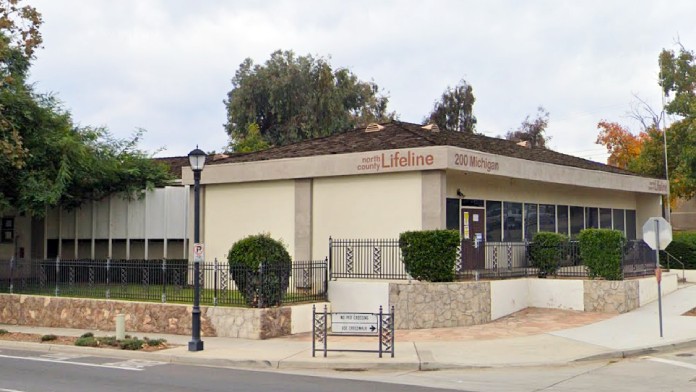
About North County Lifeline
North County Lifeline is a nonprofit behavioral health organization that provides substance use disorder treatment and mental health services across North County San Diego. The organization offers outpatient and intensive outpatient programs for adolescents and adults, with specialized services for underserved populations, justice involved individuals, and youth with co-occurring conditions.
Founded in the late 1960s by community volunteers responding to local youth drug use, Lifeline Community Services has spent more than five decades delivering trauma informed, recovery focused care that meets individuals where they are in their healing journey. When you need detox or medication assisted treatment, they can refer you to a community resource.
Outpatient Substance Use Disorder Treatment in Vista
North County Lifeline focuses on outpatient and intensive outpatient treatment for individuals managing substance use disorders and related mental health concerns. Each year, the organization serves thousands of clients through individual counseling, family therapy, group sessions, medical and mental health evaluations and coordinated case management services.
Treatment incorporates evidence based practices such as cognitive behavioral therapy, motivational interviewing and structured relapse prevention strategies. All services are delivered within a trauma informed framework that prioritizes safety, respect, and emotional stability. Programs emphasize age appropriate, recovery centered life skills, including stress management, healthy coping techniques, self care routines and emotional regulation, to support long term success.
TrueLife Recovery for Teens
North County Lifeline operates TrueLife Recovery, the North Coastal Teen Recovery Center, which provides specialized outpatient treatment for adolescents between the ages of 12 and 17 years. These services address drug and alcohol use as well as related emotional and behavioral concerns.
Care is offered at participating schools in Vista and Oceanside, as well as at clinic locations, making treatment accessible for families throughout the region. Programs are designed to reflect developmental needs and focus on building resilience, accountability, and healthy decision making in young people.
Payment options include private insurance, MediCal, self pay arrangements, and a sliding fee scale based on financial eligibility.
| Levels of Care | Detox Service Setting | Programs | Payment Options |
|---|---|---|---|
|
Inpatient and residential programs provide round-the-clock medical and emotional support as you live at the treatment facility. This level of care may be recommended if you have severe addictions or mental health conditions since it removes outside distractions and allows you to focus solely on therapy. |
In outpatient therapy, you’ll attend therapy sessions several times each week while living at home. This is ideal if you have a strong support system and a lower risk of relapse. Outpatient treatment offers flexibility to maintain work, school or family obligations. |
||
|
Inpatient detox occurs in a dedicated treatment facility. You’ll live there around the clock and receive intensive medical support and supervision to help manage your withdrawal symptoms. It is suitable for individuals with moderate to severe addictions as it ensures a stable detox environment. |
Outpatient detox gives you access to medically supervised withdrawal services while still allowing you to live at home. You’ll attend a clinic for treatment and monitoring. This flexible option is suitable for those with mild to moderate withdrawal symptoms who have strong support systems. |
||
|
Alcohol detox programs offer medical support to help individuals withdraw safely from alcohol. Your care team may use medications to ease your symptoms and provide medical monitoring to address complications.
|
Drug detox programs support individuals who are withdrawing from addictive substances like cocaine and heroin. Medical support helps you manage symptoms in a controlled and safe environment so you can achieve initial sobriety.
|
||
|
Private Insurance
|
Self Pay
|
Levels of Care
Inpatient and residential programs provide round-the-clock medical and emotional support as you live at the treatment facility. This level of care may be recommended if you have severe addictions or mental health conditions since it removes outside distractions and allows you to focus solely on therapy.
In outpatient therapy, you’ll attend therapy sessions several times each week while living at home. This is ideal if you have a strong support system and a lower risk of relapse. Outpatient treatment offers flexibility to maintain work, school or family obligations.
Detox Service Setting
Inpatient detox occurs in a dedicated treatment facility. You’ll live there around the clock and receive intensive medical support and supervision to help manage your withdrawal symptoms. It is suitable for individuals with moderate to severe addictions as it ensures a stable detox environment.
Outpatient detox gives you access to medically supervised withdrawal services while still allowing you to live at home. You’ll attend a clinic for treatment and monitoring. This flexible option is suitable for those with mild to moderate withdrawal symptoms who have strong support systems.
Programs
Contact



Gayle Morris, BSN, MSN, received her bachelor’s degree from the University of Illinois Chicago Medical Center and her first master’s degree from Indiana University Purdue University Indianapolis. She practiced nursing for more than two decades with a focus on pediatric physical rehabilitation, helping children and their parents after a head injury or spinal cord injury. She has been a freelance writer in health, wellness, and mental health for more than 15 years. She loves exercise, her dogs and guinea pigs, and gardening.
Detox.com regularly reviews this listing for accuracy but changes may occur between updates. For the most up-to-date information, please contact North County Lifeline.