800-671-4304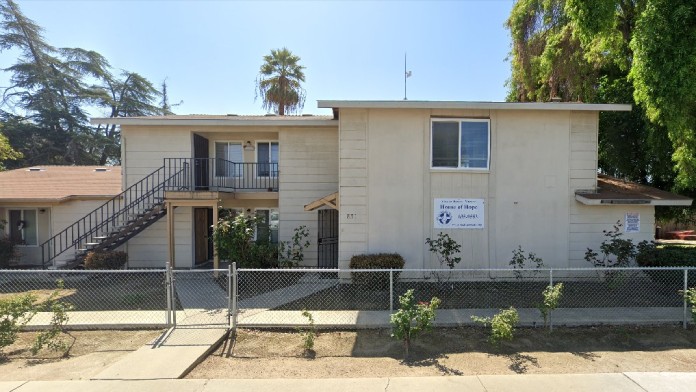
About VRM: House of Hope
VRM: House of Hope is the women’s residential program of Visalia Rescue Mission, a faith based nonprofit providing no cost addiction treatment for homeless adult women in California’s Central Valley. The program serves women with substance use disorders and co-occurring mental health conditions, with specialized support for mothers with children.
House of Hope offers a compassionate, home like environment where women can heal from addiction while rebuilding their lives without financial barriers to care. While they do not offer detox services or MAT, they can help you find appropriate resources.
Long Term Residential Addiction Treatment for Women
House of Hope provides a comprehensive 12 month residential inpatient program with up to 13 additional months of transitional aftercare support. The program uses The Genesis Process curriculum, combining Biblical principles with neuroscience based understanding of addiction, personalized relapse prevention and 12 Step recovery principles.
Treatment unfolds across four distinct phases focusing on personal wellness, spiritual healing, employment preparation and community reintegration. Women receive individual counseling, group therapy, family counseling and extensive life skills training, including financial responsibility, parenting education, job search assistance, computer skills and interview preparation to ensure lasting success after graduation.
Specialized Support for Mothers in Recovery
House of Hope is one of the few long term residential programs welcoming mothers with children, providing onsite childcare throughout treatment. This allows women to maintain their parental role while focusing fully on recovery, with mother child reunification services and parenting classes integrated into care.
The program operates on a gender specific campus with round the clock support in a structured communal living setting. All treatment services are completely free of charge, funded entirely through private donations with no insurance required or accepted.
| Levels of Care | Detox Service Setting | Programs | Payment Options |
|---|---|---|---|
|
Inpatient and residential programs provide round-the-clock medical and emotional support as you live at the treatment facility. This level of care may be recommended if you have severe addictions or mental health conditions since it removes outside distractions and allows you to focus solely on therapy. |
In outpatient therapy, you’ll attend therapy sessions several times each week while living at home. This is ideal if you have a strong support system and a lower risk of relapse. Outpatient treatment offers flexibility to maintain work, school or family obligations. |
||
|
Inpatient detox occurs in a dedicated treatment facility. You’ll live there around the clock and receive intensive medical support and supervision to help manage your withdrawal symptoms. It is suitable for individuals with moderate to severe addictions as it ensures a stable detox environment. |
Outpatient detox gives you access to medically supervised withdrawal services while still allowing you to live at home. You’ll attend a clinic for treatment and monitoring. This flexible option is suitable for those with mild to moderate withdrawal symptoms who have strong support systems. |
||
|
Alcohol detox programs offer medical support to help individuals withdraw safely from alcohol. Your care team may use medications to ease your symptoms and provide medical monitoring to address complications. |
Drug detox programs support individuals who are withdrawing from addictive substances like cocaine and heroin. Medical support helps you manage symptoms in a controlled and safe environment so you can achieve initial sobriety. |
||
|
Private Insurance
|
Self Pay
|
Levels of Care
Inpatient and residential programs provide round-the-clock medical and emotional support as you live at the treatment facility. This level of care may be recommended if you have severe addictions or mental health conditions since it removes outside distractions and allows you to focus solely on therapy.
In outpatient therapy, you’ll attend therapy sessions several times each week while living at home. This is ideal if you have a strong support system and a lower risk of relapse. Outpatient treatment offers flexibility to maintain work, school or family obligations.
Detox Service Setting
Inpatient detox occurs in a dedicated treatment facility. You’ll live there around the clock and receive intensive medical support and supervision to help manage your withdrawal symptoms. It is suitable for individuals with moderate to severe addictions as it ensures a stable detox environment.
Outpatient detox gives you access to medically supervised withdrawal services while still allowing you to live at home. You’ll attend a clinic for treatment and monitoring. This flexible option is suitable for those with mild to moderate withdrawal symptoms who have strong support systems.
Programs
Alcohol detox programs offer medical support to help individuals withdraw safely from alcohol. Your care team may use medications to ease your symptoms and provide medical monitoring to address complications.
Drug detox programs support individuals who are withdrawing from addictive substances like cocaine and heroin. Medical support helps you manage symptoms in a controlled and safe environment so you can achieve initial sobriety.
Contact



Gayle Morris, BSN, MSN, received her bachelor’s from the University of Illinois Chicago Medical Center and her first master’s from the Indiana University Purdue University Indianapolis. She practiced nursing for over two decades with a focus on pediatric physical rehabilitation, which required mental health skills to help children, and their parents work through new challenges after a head injury or spinal cord injury. She has been a freelance writer in health, wellness, and mental health for over 15 years. She loves exercise, her dogs and guinea pigs, and gardening.