

 916-299-0679
Haven House Sober Living - Los Angeles
Los Angeles, CA
90034








| Name | Address | Detox Service Setting | Levels Of Care | Media |
|---|---|---|---|---|
KCS Counseling – Fullerton |
1060 South Brookhurst Road Fullerton, CA 92833 |
Detox Service Setting
Inpatient DetoxOutpatient DetoxMAT
|
Levels Of Care
InpatientOutpatient
|

|
St. Elizabeth Healthcare and Rehabilitation Center |
2800 North Harbor Boulevard Fullerton, CA 92835 |
Detox Service Setting
Inpatient DetoxOutpatient Detox
|
Levels Of Care
InpatientOutpatient
|

|
Woodglen Recovery Junction |
771 West Orangethorpe Avenue Fullerton, CA 92832 |
Detox Service Setting
Inpatient Detox
|
Levels Of Care
InpatientAftercare
|

|
Western Pacific Medical Corp OP Western Pacific Fullerton Medical |
218 East Commonwealth Avenue Fullerton, CA 92832 |
Detox Service Setting
MATOutpatient Detox
|
Levels Of Care
Outpatient
|
|
Woodglen Recovery Junction Inc |
751 West Orangethorpe Avenue Fullerton, CA 92832 |
Detox Service Setting
Inpatient DetoxOutpatient Detox
|
Levels Of Care
InpatientOutpatient
|
|
It’s Time To Recover |
1135 W North St Anaheim, CA 92801 |
Detox Service Setting
Inpatient DetoxOutpatient Detox
|
Levels Of Care
InpatientOutpatient
|

|
Lighthouse Treatment Center: Alcohol & Drug Rehab Orange County |
1310 W Pearl St Anaheim, CA 92801 |
Detox Service Setting
Inpatient DetoxOutpatient Detox
|
Levels Of Care
InpatientOutpatient
|
|
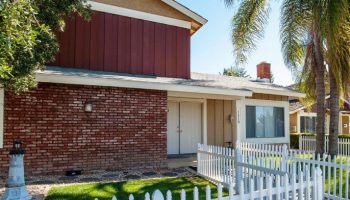
Anaheim Lighthouse Treatment Center |
1320 West Pearl Street Anaheim, CA 92801 |
Detox Service Setting
Inpatient DetoxOutpatient Detox
|
Levels Of Care
InpatientOutpatientDual Diagnosis+1
|

|
Lift Off Recovery |
1567 W Embassy St Anaheim, CA 92802 |
Detox Service Setting
Inpatient DetoxOutpatient Detox
|
Levels Of Care
InpatientOutpatient
|

|
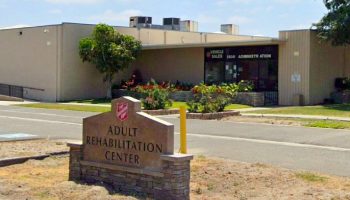
The Salvation Army Anaheim Adult Rehabilitation Center |
1300 S Lewis St Anaheim, CA 92805 |
Detox Service Setting
Inpatient DetoxOutpatient Detox
|
Levels Of Care
InpatientOutpatient
|
|
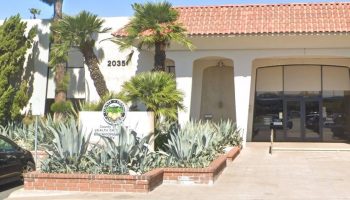
OC Health Care Agency |
2035 East Ball Road Anaheim, CA 92806 |
Detox Service Setting
Outpatient Detox
|
Levels Of Care
OutpatientAftercareDual Diagnosis
|
|
Better Days Treatment Center |
2220 W Judith Ln Anaheim, CA 92804 |
Detox Service Setting
Inpatient DetoxOutpatient Detox
|
Levels Of Care
InpatientOutpatient
|

|
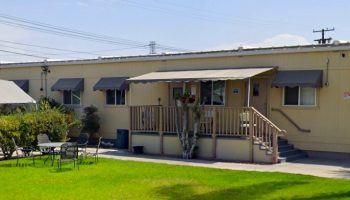
Roque Center |
10936 Dale Ave Stanton, CA 90680 |
Detox Service Setting
Inpatient DetoxOutpatient Detox
|
Levels Of Care
InpatientOutpatient
|
|
Recovery Beach Addiction Treatment Center Orange County |
13212 Chapman Ave Garden Grove, CA 92840 |
Detox Service Setting
Inpatient DetoxOutpatient Detox
|
Levels Of Care
InpatientOutpatient
|

|
Kaiser Permanente Rehabilitation Pavilion |
4201 W Chapman Ave Orange, CA 92868 |
Detox Service Setting
Inpatient DetoxOutpatient Detox
|
Levels Of Care
InpatientOutpatient
|
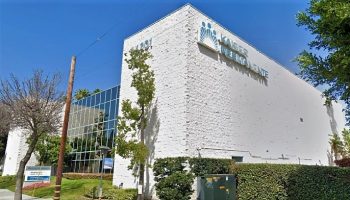
|
Fullerton sits in the northern tip of Orange County, which means residents have access to both private detox facilities concentrated throughout the county and state-funded services administered through the Orange County Health Care Agency (OC HCA).
Fentanyl remains the dominant threat in Orange County. The OC Health Care Agency launched its county-wide “Fentanyl is Forever” public awareness campaign in October 2023 using opioid settlement funds, and overdose deaths have declined since. Anyone researching detox centers in Fullerton should confirm that their chosen facility has specific protocols for synthetic opioid withdrawal, including the option to initiate buprenorphine or methadone on day one of admission.
All residential detox programs in California must hold a license from the California Department of Health Care Services (DHCS), Behavioral Health Licensing and Certification Division. Facilities also need at least one American Society of Addiction Medicine (ASAM) level-of-care designation under a 2023 state law, making Fullerton one of the more strictly regulated markets in the country.
Residents can access state-funded detox through OC HCA’s Drug Medi-Cal Organized Delivery System (DMC-ODS), which covers withdrawal management, opioid treatment programs, and all standard levels of outpatient care for Medi-Cal members. For non-Medi-Cal residents, Fullerton’s proximity to a dense cluster of private providers throughout north and central Orange County means inpatient, outpatient, and medication-assisted detox programs are within a short drive or OCTA bus ride.
California’s Proposition 36, passed by voters in November 2024, changed how the courts handle certain drug possession cases. Judges can now order treatment instead of jail time for a broader set of drug offenses, and providers are seeing more court-referred patients entering detox for the first time. For families, this shift is meaningful, as someone who might have cycled through the criminal justice system can now be connected to clinical care earlier.
Orange County’s private treatment market spans one of the widest cost ranges in the country, from publicly funded social model detox programs covered entirely by Medi-Cal to luxury residential programs priced above $1,000 per day. Understanding what drives those costs and which payment pathways apply to your situation is the first practical step.
California’s SB 855 (2020) mental health parity law requires most state-regulated commercial insurance plans to cover all medically necessary SUD treatment using ASAM clinical criteria, making coverage stronger here than in many other states. For more context on what to budget for, this detox cost guide breaks down pricing by level of care.
Orange County’s treatment density drives significant price variation, from lean clinical settings to resort-style programs. The factors that most influence cost are the level of medical supervision, whether the facility is in-network with your insurer, and length of stay.
Social model, non-medical residential detox is a separate low-barrier option: it is covered at no cost through the Orange County DMC-ODS for eligible Medi-Cal members, while privately funded stays typically run $1,500 to $4,000.
Orange County participates in California’s Drug Medi-Cal Organized Delivery System (DMC-ODS). Eligible Medi-Cal members can access withdrawal management services, opioid treatment program (OTP) dosing 7 days per week, intensive outpatient treatment, residential treatment, and MAT at no cost.
To access services, call the 24/7 OC Member Access Line at (800) 723-8641 or OC Links at (855) 625-4657.
Several pathways can lower or spread out the cost of detox for uninsured and underinsured Fullerton residents.

Several DHCS-certified nonprofit providers in Orange County offer income-adjusted fees for uninsured or underinsured residents.
SAMHSA’s Substance Abuse Prevention and Treatment Block Grant supports state-funded programs accessible through OC HCA.
Most private facilities in the Fullerton area offer monthly payment plans and can work with financing partners.
Multiple Orange County facilities accept military insurance. Veterans may also access residential detox through the VA Greater Los Angeles Healthcare System, which serves Orange County residents.
California maintains one of the most comprehensive regulatory frameworks for substance use disorder treatment in the country, and Orange County adds a county-level oversight layer. Anyone searching for a detox program in Fullerton should confirm licensure with DHCS before admitting.
The sole authority to license residential non-medical SUD and detox facilities statewide. All legitimate residential detox programs in Fullerton must hold an active DHCS license, and as of 2023 facilities must also carry an ASAM level-of-care designation matching their services. Learn more at dhcs.ca.gov.
Administers the county Drug Medi-Cal Organized Delivery System and oversees all publicly funded SUD services, including NTP and OTP sites. OC HCA requires Orange County residency for access to county-contracted opioid treatment programs. Learn more at ochealthinfo.com.
Narcotic Treatment Programs (methadone clinics) must obtain both a DEA Schedule II registration and SAMHSA certification. These federal requirements apply to all NTPs operating in Fullerton and across Orange County. Learn more at samhsa.gov.
Voluntary national accreditations that exceed minimum DHCS licensure requirements. These credentials indicate a facility has met rigorous quality and safety benchmarks and are worth verifying when comparing private programs. Learn more at jointcommission.org and carf.org.
California has strong MAT access policies, and Orange County’s DMC-ODS explicitly covers all three primary medications. People accessing detox and treatment in Fullerton should know these options are available in both private and publicly funded programs.
Available from office-based prescribers, federally qualified health centers, and licensed OTPs throughout Orange County. OC DMC-ODS members can access buprenorphine at all applicable levels of care. Since 2023, the federal X-waiver requirement has been eliminated, so any licensed physician can prescribe it.
Dispensed through SAMHSA-certified Narcotic Treatment Programs only. OC HCA contracts with licensed NTP facilities in the county, available 7 days per week. Orange County residents must use an OC-contracted site; courtesy dosing from out of county is handled case by case.
Oral and extended-release injectable naltrexone are available through private prescribers and OC HCA-contracted providers. Vivitrol is often used post-detox and requires the patient to be fully opioid-free before the first dose.
Orange County’s harm reduction infrastructure is more limited than in neighboring Los Angeles County, primarily because the county does not currently operate an authorized syringe services program. Following years of opposition to needle exchanges, the most recent application to operate one in Santa Ana was withdrawn in December 2024.
Despite that gap, several resources provide life-saving naloxone access and overdose education to residents across north Orange County and Fullerton.
OC HCA’s Behavioral Health Services team coordinates the county’s opioid prevention strategy, including the “Fentanyl is Forever” public awareness campaign launched with opioid settlement funds in October 2023. OC Links connects callers to clinical navigators who can locate withdrawal management, residential, or outpatient programs while the caller remains on the line. Call (855) 625-4657.
SafeRxOC is a coalition committed to expanding access to MAT and overdose reversal medication in Orange County. In 2021 it partnered with CA Bridge to launch a naloxone distribution program inside the UCI Medical Center Emergency Department, ensuring patients treated for overdose leave with naloxone and a connection to treatment resources.
The DHCS Naloxone Distribution Project ships both 4mg nasal naloxone and intramuscular naloxone to eligible community organizations, treatment facilities, and law enforcement in Fullerton and throughout Orange County. In 2024, DHCS partnered with Amneal Pharmaceuticals to produce a generic CalRx-branded naloxone nasal spray distributed at reduced cost statewide.
Since naloxone became available over the counter and through California’s standing order, residents in Fullerton can walk into any pharmacy and buy Narcan or the CalRx generic without a prescription. California law protects bystanders who administer naloxone under the state’s Good Samaritan statute.
Orange County’s overdose picture has improved considerably since the peak years of 2021 to 2023, but fentanyl contamination remains a serious risk for people in Fullerton and across north Orange County. The figures below reflect county-level data that directly affect people seeking detox in this region.
Orange County recorded 407 fentanyl-related deaths in 2024, down from 613 in 2023, a 34% single-year decline driven by expanded naloxone access and MAT availability. Source: Orange County Sheriff-Coroner.
Orange County Sheriff’s narcotics teams seized more than 184 pounds of fentanyl powder and approximately 45,300 fentanyl pills in 2024, indicating the ongoing volume of illicit supply entering north Orange County communities including Fullerton. Source: Orange County Sheriff.
Orange County men are nearly two times more likely than women to be hospitalized for or die from a drug or alcohol-related incident, a disparity that shapes how outreach and detox programs are designed at the county level. Source: OC Health Care Agency.
Call the OC Member Access Line at (800) 723-8641 any time, day or night. The line connects you to OC Health Care Agency navigators who can confirm Medi-Cal eligibility, locate a contracted detox or withdrawal management program, and coordinate same-day intake in urgent situations. Proof of Orange County residency is required for county-funded services.
Yes. Proposition 36, passed in November 2024, expanded the courts’ ability to order treatment instead of incarceration for certain drug possession offenses. A judge can now mandate participation in a supervised treatment program, including detox followed by residential or outpatient care, for qualifying defendants. Fullerton-area providers participating in the OC Collaborative Courts system accept these referrals directly.
Fentanyl is now found in counterfeit pills and illicit supplies of cocaine, methamphetamine, and other drugs throughout Orange County. Any facility you consider should use fentanyl test strips as part of intake harm reduction education and should have buprenorphine or methadone initiation protocols available on admission day. For people managing opioid use disorder, reviewing a program’s inpatient detox approach to synthetic opioid withdrawal is an important step before choosing a provider.
Fullerton is served by OCTA bus routes connecting to Anaheim, Orange, and Santa Ana, where several county-contracted detox and outpatient providers are located. The Fullerton Transportation Center also offers connections to Metrolink, which reaches the broader Southern California treatment corridor. Many private facilities offer transportation assistance at intake, so it is worth asking during the admissions call.
A DHCS license is the minimum legal requirement for any residential or outpatient detox program to operate in California. JCAHO (The Joint Commission) and CARF accreditation are voluntary designations that require facilities to meet more rigorous quality, safety, and clinical practice standards. Accreditation does not replace DHCS licensure; it supplements it. When comparing programs in Fullerton, look for both a current DHCS license and at least one voluntary accreditation for the highest assurance of clinical quality.
Methadone for opioid use disorder is available through licensed Narcotic Treatment Programs (NTPs) contracted with OC HCA. Orange County residents covered by Medi-Cal can access NTP dosing seven days per week at no cost through the DMC-ODS. You must be an Orange County resident to use OC-contracted NTP sites; courtesy dosing for out-of-county travelers is handled case by case. Contact OC Links at (855) 625-4657 for the current NTP location nearest to Fullerton.


Cary has more than three decades of nursing expertise as an LPN and holds a bachelor’s degree in Liberal Arts. She is also working toward a Master’s degree focused on public health policy. Her professional journey has been dedicated to addressing healthcare disparities for both adults and children.